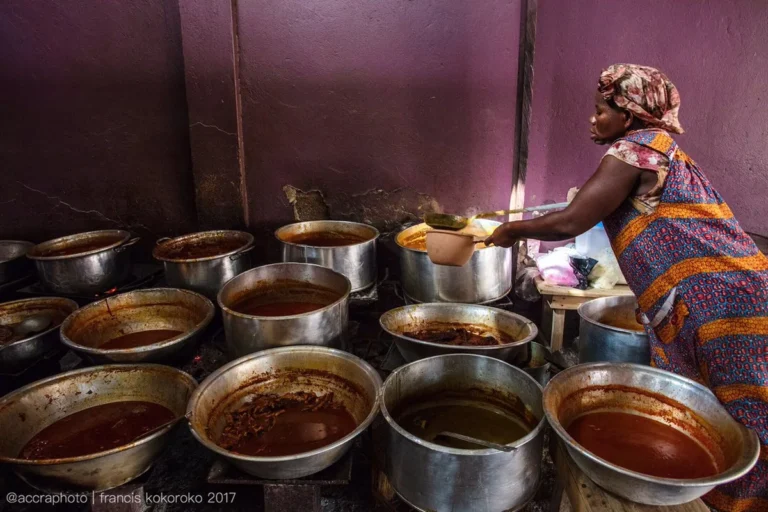
If you want to eat the way Ghanaians actually eat — not the hotel-buffet version — you go to a chop bar. These humble, no-frills eateries are where real Ghanaian food lives: bubbling pots of soup, mounds of freshly pounded fufu, earthenware bowls and a few cedis for a plate that fills you up and tastes of home. For a visitor, a chop bar is the single best (and cheapest) crash course in Ghanaian cuisine. Here’s what they are, what to order, how to eat, and how to find a good one in Accra.
What is a chop bar?
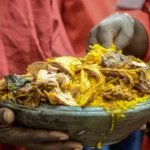
In Ghanaian pidgin, “to chop” means “to eat” — so a chop bar is, simply, a local eatery serving traditional Ghanaian food in a casual, informal setting. They’re found mostly across southern Ghana, usually open-sided and unpretentious, often family-run, and beloved by locals for honest cooking at honest prices. Food is typically served in local asanka (earthenware) bowls and eaten on the premises, frequently with a few local drinks on hand. It’s a genuine cultural institution.
What chop bars serve
The menu is built around starchy staples paired with rich soups and stews. Expect:
- Swallows: fufu, banku, konkonte, and omotuo (rice balls) — eaten with soup.
- Soups: light soup, groundnut (peanut) soup, palm-nut soup, often with goat, fish, chicken or bushmeat.
- Rice dishes: jollof, plain rice and stew, sometimes waakye.
- Sides: fried plantain, garden-egg stew, kontomire, and plenty of pepper and shito.
Each chop bar has its specialities and its busiest days — the soup pot is the heart of the place.
How to order and eat
Ordering is refreshingly direct: tell them your swallow and your soup (“fufu and light soup with goat”), or point at what looks good. Food usually comes in an asanka bowl. The traditional way to eat a swallow is with your right hand — pinch off a piece of fufu or banku, dip it in the soup, and swallow without chewing (the texture is the point). Wash your hands at the basin first; cutlery is sometimes available if you prefer. Pay at the end, in cash or Mobile Money.
Chop bar etiquette and tips
- Use your right hand for eating and giving/receiving — the left is considered unclean.
- Go at lunchtime when the food is freshest and the place is busiest (a good sign).
- Start with the pepper “small” if you’re heat-shy — Ghanaian chop-bar food can be fiery.
- Carry small notes and have Mobile Money set up.
- Be adventurous — ask what’s good today and try the house soup.
What it costs
This is the great value of Ghanaian eating: a generous, filling chop-bar plate typically costs just a handful of cedis — a fraction of a restaurant meal — making it both the most authentic and the most budget-friendly way to eat. You can eat very well, several times a day, for very little.
How to find a good chop bar
The best ones are found by following the crowd — a busy chop bar at lunchtime is busy for a reason. Ask locals, your driver or hotel staff for their favourite; recommendations beat signage every time. Accra has well-known sit-down spots like The Chop Bar and Asanka Local that offer the experience in slightly more polished surroundings — a gentle entry point — but the neighbourhood pots are where the soul is.
Chop bar vs restaurant
Think of it as a spectrum. A restaurant gives you comfort, air-conditioning, a menu and card payment; a chop bar gives you authenticity, rock-bottom prices and the real thing. Do both: restaurants for a treat or a break, chop bars for the everyday truth of how Ghana eats. Eating safely is straightforward — see our street food safety tips.
Chop bar dishes and their classic pairings
Half the fun is matching a swallow to the right soup. Here’s the cheat sheet:
| Swallow / dish | Classic pairing |
|---|---|
| Fufu | Light soup or groundnut soup |
| Banku | Okro stew or grilled tilapia & pepper |
| Konkonte | Groundnut or palm-nut soup |
| Omotuo (rice balls) | Groundnut soup |
| Plain rice / jollof | Stew, with chicken or fish |
A note on chop bar culture
Chop bars are more than cheap eateries — they’re a genuine cultural institution and a great social leveller, where labourers, office workers and the occasional curious traveller all share the same benches and the same pots. Eating at one isn’t slumming it; it’s participating in everyday Ghanaian life. Strike up a conversation, ask what’s good today, and you’ll often get a warmer welcome (and better food) than at any tourist-facing restaurant.
The bottom line
A chop bar is the most authentic, affordable and rewarding way to eat in Ghana — honest pots of soup, fresh swallows, earthenware bowls and a few cedis a plate. Order your fufu and light soup, eat with your right hand, follow the lunchtime crowd to the best spots, and don’t fear the pepper. It’s not just a cheap meal; it’s a window into everyday Ghanaian life. Use our food guide to know what to order, then dive in.