Ghanaians are routinely ranked among the friendliest people on earth, and you feel it from the moment someone says “akwaaba” — welcome. But behind that warmth sits a deep, living culture: powerful traditional kingdoms, a profound respect for elders, vibrant festivals, world-famous cloth and music, and a web of everyday customs worth understanding before you arrive. This guide unpacks Ghanaian culture — the people, languages, values, religion, naming traditions and arts — so you travel with context, not just curiosity.
The people: a tapestry of ethnic groups
Ghana is home to many distinct ethnic groups, each with its own language, traditions and history. The largest are the Akan (including the Asante and Fante), followed by the Mole-Dagbani of the north, the Ewe of the southeast (Volta), and the Ga-Adangbe of the Accra coast. This diversity shapes everything — food, festivals, dress and dialect shift as you travel from the coast to Kumasi to the savannah north — yet a shared national identity and famous hospitality bind it together.
Language: English, Twi and beyond
English is the official language and is widely spoken, so you’ll get by easily. But most Ghanaians speak at least one local language too: Twi (an Akan language) is the most widely understood across the south and centre, while Ga is spoken around Accra, Ewe in the Volta region, and Dagbani and others in the north. Learning a couple of words goes a long way — “akwaaba” (welcome), “medaase” (thank you) and “ɛte sɛn?” (how are you?) will earn instant smiles.
Family, community and respect for elders
At the heart of Ghanaian culture is community over individualism. Extended family is central, hospitality is a point of honour, and respect for elders is paramount — they’re greeted first, served first and deferred to in decisions. Greetings themselves matter enormously: you’re expected to acknowledge people when you enter a space, and there’s even a convention of shaking hands from right to left in a group. Skipping a greeting can genuinely cause offence, so lead with one.
Chieftaincy and the living kingdoms
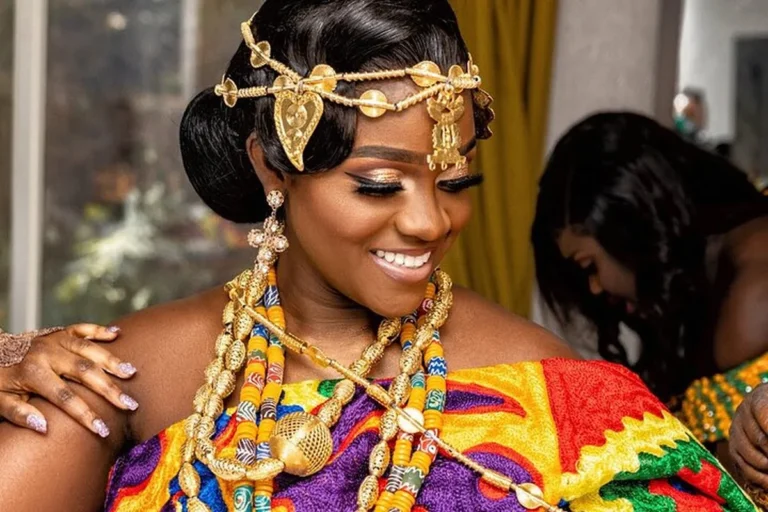
Ghana’s traditional rulers still wield real cultural authority alongside the modern state. The most famous is the Asantehene, king of the Asante, whose court at Manhyia Palace in Kumasi centres on the sacred Golden Stool — believed to house the soul of the Asante nation. Chiefs across the country preside over land, custom and festivals, appearing in dazzling kente and gold at durbars. Witnessing a chief in full regalia is one of the most memorable cultural sights in Ghana.
Naming traditions: the day you were born
One of Ghana’s most charming customs: many people carry a name based on the day of the week they were born (a “kradin” or soul name). It’s why you’ll meet so many Kwames, Akosuas and Kofis — and why former UN Secretary-General Kofi Annan was, by his name, born on a Friday.
| Day born | Male | Female |
|---|---|---|
| Monday | Kwadwo / Kojo | Adwoa |
| Tuesday | Kwabena | Abena |
| Wednesday | Kwaku | Akua |
| Thursday | Yaw | Yaa |
| Friday | Kofi | Afua / Afia |
| Saturday | Kwame | Ama |
| Sunday | Kwasi / Akwasi | Akosua |
Tell a Ghanaian which day you were born and they’ll happily give you your Akan name — an instant icebreaker.
Religion and belief
Ghana is a deeply religious and remarkably tolerant society. The majority are Christian (especially in the south), with a significant Muslim population (strongest in the north), and traditional African beliefs woven throughout — ancestral reverence, shrines and sacred sites remain part of daily life. Sundays bring exuberant church services; Fridays, busy mosques. Faith is public, joyful and central to community life.
Festivals: culture switched fully on
Ghanaian festivals are spectacular windows into the culture — Homowo (Ga), Aboakyer (Effutu/Winneba), Hogbetsotso (Anlo-Ewe), Akwasidae (Asante) and many more, with drumming, dancing, processions and chiefs in full regalia. Timing your trip around one transforms it. See our full Ghana festivals guide for what’s on when.
Cloth, symbols and the arts
Few cultures express identity through textile like Ghana. Kente — the radiant handwoven cloth of the Asante and Ewe — carries meaning in every pattern, while adinkra symbols stamp proverbs and philosophy onto cloth and walls. Add the woodcarving of Ahwiaa and the beadwork of the Krobo, and you have a craft heritage you can watch being made (and buy direct) around Kumasi. Music and dance are just as central — from highlife to azonto and global afrobeats (read our Ghanaian music guide).
Everyday etiquette in a nutshell
A few customs smooth every interaction: use your right hand for greeting, giving, receiving and eating; greet before you transact; dress modestly at sacred sites and when meeting elders; ask before photographing people; and be patient with “Ghana time” — punctuality is relaxed. For the full rundown, see our dedicated Ghanaian etiquette guide.
Rites of passage: naming, puberty and funerals
Ghanaian life is marked by rich ceremonies. About a week after birth comes the outdooring (naming) ceremony, where a baby is presented to the community and formally named. Among the Krobo, the Dipo puberty rite initiates young women into adulthood with weeks of teaching and celebration. Marriages usually begin with a vibrant traditional engagement (the “knocking” and dowry rites) before any church wedding.
But nothing rivals the Ghanaian funeral. Far from sombre, funerals here are grand, days-long celebrations of life — mourners in coordinated red-and-black or white cloth, brass bands and dancing, huge gatherings, and the famous bespoke “fantasy coffins” shaped like fish, cars or cocoa pods to reflect the life lived. They are among the most important social events in the calendar, and a respectful invitation to one is an extraordinary window into the culture.
Proverbs, folklore and Kweku Ananse
Ghana has a deep oral tradition. Wisdom travels in proverbs, often illustrated by adinkra symbols, and folklore stars Kweku Ananse, the cunning spider whose trickster tales — “Anansesem” — taught generations about cleverness, greed and consequence. Storytelling, drumming and dance remain the living library of Ghanaian values.
Useful Twi phrases to know
English will get you everywhere, but a few words of Twi (the most widely spoken local language) earn instant warmth.
| English | Twi |
|---|---|
| Welcome | Akwaaba |
| Thank you | Medaase |
| How are you? | Ete sen? |
| I’m fine | Me ho ye |
| Please | Mepa wo kyew |
| Sorry | Kafra |
| How much? | Eye sen? |
| Good morning | Maakye |
Try them with a smile — Ghanaians delight in visitors making the effort, and it opens doors no guidebook can.
The bottom line
Ghana’s warmth is real, and understanding the culture behind it makes every encounter richer. Lead with a greeting, use your right hand, respect elders and chiefs, dress thoughtfully, and embrace the festivals, food and music that make this country sing. Learn your Akan day-name, say “akwaaba” back, and you’ll find the welcome flows both ways. Go deeper with our guides to festivals, etiquette and food.