Ghana runs on cash and, increasingly, on mobile money — and getting your money set up wrong in the first day is the single most common rookie tax I see visitors pay. Bring the wrong notes, change at the airport, ignore Mobile Money, and you’ll lose time and value all trip. This guide explains exactly how the cedi works, what to bring, where to change it, how much you’ll spend, and the local trick that quietly makes everything easier.
First, what’s a cedi actually worth?
The currency is the Ghana cedi (currency code GHS, written GH₵), divided into 100 pesewas — the name comes from the Akan word for the cowrie shell, the old currency. The cedi has been weak and volatile for years, hovering very roughly around GH₵12–16 to the US dollar through 2025–2026 — but it genuinely moves, so check a live rate just before you travel rather than trusting any printed figure (this one included). Because of that volatility, prices in cedis can climb during your stay; carry a little buffer.
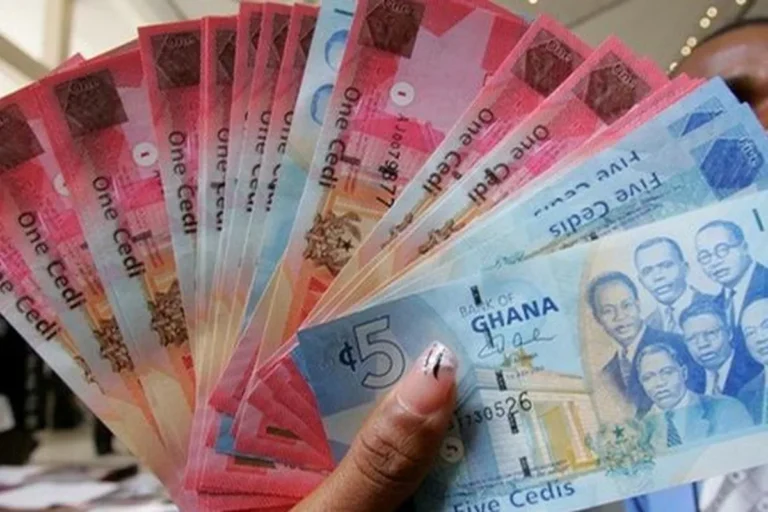
The notes and coins you’ll handle
| Denomination | Type | Everyday use |
|---|---|---|
| 1, 2 cedis | Note & coin | Small buys, change, tips |
| 5, 10 cedis | Note | Street food, short taxis, water |
| 20, 50 cedis | Note | Meals, longer rides |
| 100, 200 cedis | Note | Hotels, bigger bills (hard to break for small buys) |
| 1–50 pesewas | Coin | Loose change |
Each note is a different colour, which makes them easy to tell apart. The practical lesson: hoard small notes. Vendors and taxi drivers frequently can’t break a GH₵50 or GH₵100, and “no change” can stall a transaction completely.
What it costs: a rough daily budget
Prices shift with the exchange rate, but as a 2026 ballpark per person, per day:
| Travel style | Per day (GH₵) | What it covers |
|---|---|---|
| Budget | ~500–800 | Street food, shared/public transport, hostels or basic guesthouses |
| Mid-range | ~1,500–2,500 | Restaurants, Bolt/taxis, a comfortable hotel, paid attractions |
| Higher-end | 3,000+ | Top hotels, a private driver, guided tours |
Attraction entries, beach fees and tips are small cash sums on top — always carry more low-value notes than you think you’ll need.
Cash, cards or Mobile Money? How to pay
| Method | Where it works | Notes |
|---|---|---|
| Cash (cedis) | Everywhere | King. Keep small notes; the default for most spending |
| Mobile Money (MoMo) | Taxis, traders, small shops, many services | How locals pay; set up with a local SIM (see below) |
| Cards (Visa/Mastercard) | Upscale hotels, malls, bigger city restaurants | Limited — never assume a card will work |
| USD/EUR/GBP cash | To exchange, not to spend | Bring to change into cedis; USD gets the best rate |
Where to change money — and where not to
- Bring US dollars first (Euros and British pounds also fine). USD gets the best rates and is easiest to exchange. Bring newer, clean, large bills — worn or older notes are often refused or discounted.
- Change at licensed forex bureaus in town. They beat banks on rate and speed. Airport rates are poor, so change only a little there to get going.
- Never use unlicensed street changers. It’s where short-counts and scams happen — the small rate gain isn’t worth it.
- Use ATMs for top-ups. Most Visa and Mastercard cards work at major-bank ATMs (GCB, Stanbic, Absa, Ecobank). Tell your bank you’re travelling, expect limits and fees, and use machines attached to a branch.
The thing that’ll change your trip: Mobile Money
Ghana largely runs on Mobile Money (MoMo) — paying from a phone wallet rather than a card. Taxis, market traders, small shops and even some attractions take MoMo instantly. If you buy a local SIM card (MTN has the widest reach), you can often register a wallet and load cash at any of the ubiquitous MoMo kiosks. It saves carrying big wads of notes and is exactly how locals pay — the closest thing to a travel superpower here.
Tipping and bargaining
- Tipping isn’t compulsory but is appreciated: round up taxis, leave 5–10% in restaurants that don’t add a service charge, and tip guides and porters a little.
- Bargaining is expected in markets and for taxis — agree the fare before you set off. It’s friendly, not aggressive. Shops with marked prices are fixed.
- Keep perspective. Hard bargaining over tiny sums with a market trader rarely sits well — a fair price beats a “win.”
Your money, sorted on day one
A simple first-day plan: change a small amount at the airport for a taxi and SIM, get a local SIM and set up MoMo, then change the bulk at a licensed forex bureau in town at a better rate. After that, top up with ATMs and MoMo as you go, and always keep a stash of small notes. Pair this with our packing list and itinerary and your logistics are basically done.
What things actually cost in Ghana
Rough 2026 ballpark prices to calibrate your wallet. Everything moves with inflation and the exchange rate, so treat these as a guide, not gospel.
| Item | Typical price (GH₵) |
|---|---|
| Bottle of water (small) | 2–5 |
| Street food plate (waakye, jollof, banku) | 20–50 |
| Mid-range restaurant main | 80–200 |
| Local beer (Club, Star) | 20–45 |
| Bolt/Uber ride across Accra | 30–90 |
| Museum or castle entry (foreign visitor) | 80–150 |
| Local SIM with data bundle | 50–150 |
| Budget guesthouse (night) | 200–500 |
| Comfortable hotel (night) | 700–2,000 |
Is Ghana expensive? For most visitors it’s mid-range for West Africa — street food, local transport and domestic travel are cheap, while imported goods, smart hotels and tourist-priced tours add up quickly.
Money pitfalls to avoid
- Changing at the airport. Rates are poor — swap only enough for a taxi and SIM, then use a town bureau.
- Old or damaged foreign notes. Worn, torn or older US dollar bills are routinely refused or discounted.
- Big notes, no change. A GH₵100 or 200 can stall a small purchase — keep a thick stack of small notes.
- Assuming cards work. Outside upscale hotels and malls, they often don’t — carry cash and MoMo as your real payment methods.
- Unlicensed street changers. A slightly better rate isn’t worth the short-count risk; use licensed bureaus only.
Banking, ATMs and opening hours
Banks generally open Monday to Friday, roughly 8:30am to 4pm, with some branches doing Saturday mornings. ATMs are plentiful in Accra, Kumasi and other cities but scarce in rural areas and parts of the north — withdraw enough before you head off the beaten track, especially before a Mole trip. Expect a cap on how much you can take out per transaction (and per-withdrawal fees from your home bank), so factor that in. Use ATMs attached to a bank branch in daylight where possible, and tell your bank your travel dates so they don’t freeze the card on the first withdrawal.
On bringing money across the border: large sums of cash should be declared on arrival and departure, so don’t travel with undeclared bricks of currency. For day-to-day spending, the winning combination is a modest stash of US dollars to exchange, a debit card for ATM top-ups, and Mobile Money for everything else.
The bottom line
Bring clean US dollars to exchange, change them at licensed forex bureaus (not the airport or the street), and set up Mobile Money on day one with a local SIM. Carry plenty of small notes, treat cards as a backup only, and budget realistically for the exchange-rate swings. Do that and money becomes the easy part of your trip instead of a daily friction.