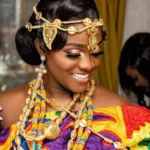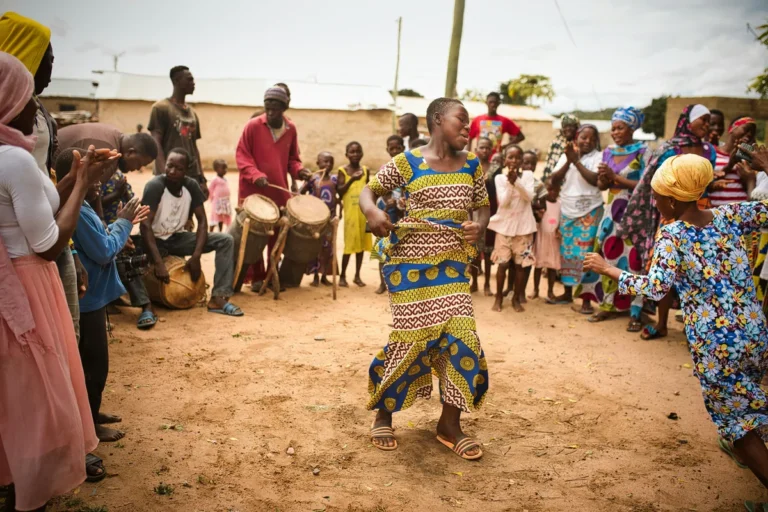
In Ghana, you don’t just watch a dance — you feel it in your chest before you understand it with your eyes. A master drummer leans into a carved atumpan, a bell locks the pulse, and suddenly an entire courtyard is moving as one. Dance here isn’t decoration; it’s a language. It welcomes chiefs, mourns the dead, celebrates the harvest, flirts, jokes, and — increasingly — goes viral. This is your guide to Ghanaian dances: the big traditional styles, the street moves shaking global Afrobeats, and where to see them for yourself.
The heartbeat: it all starts with the drum
You can’t talk about Ghanaian dance without talking about the drums, because the two are inseparable. Most traditional Ghanaian music is built on polyrhythm — several rhythms layered at once — anchored by a metal bell (the gankogui or dawuro) that never wavers. Over that steady pulse, a master drummer improvises, and here’s the magic: the lead drum actually talks to the dancers. A change in the drum pattern is a cue, and a skilled dancer answers it instantly with their body. It’s a live conversation, every single time.
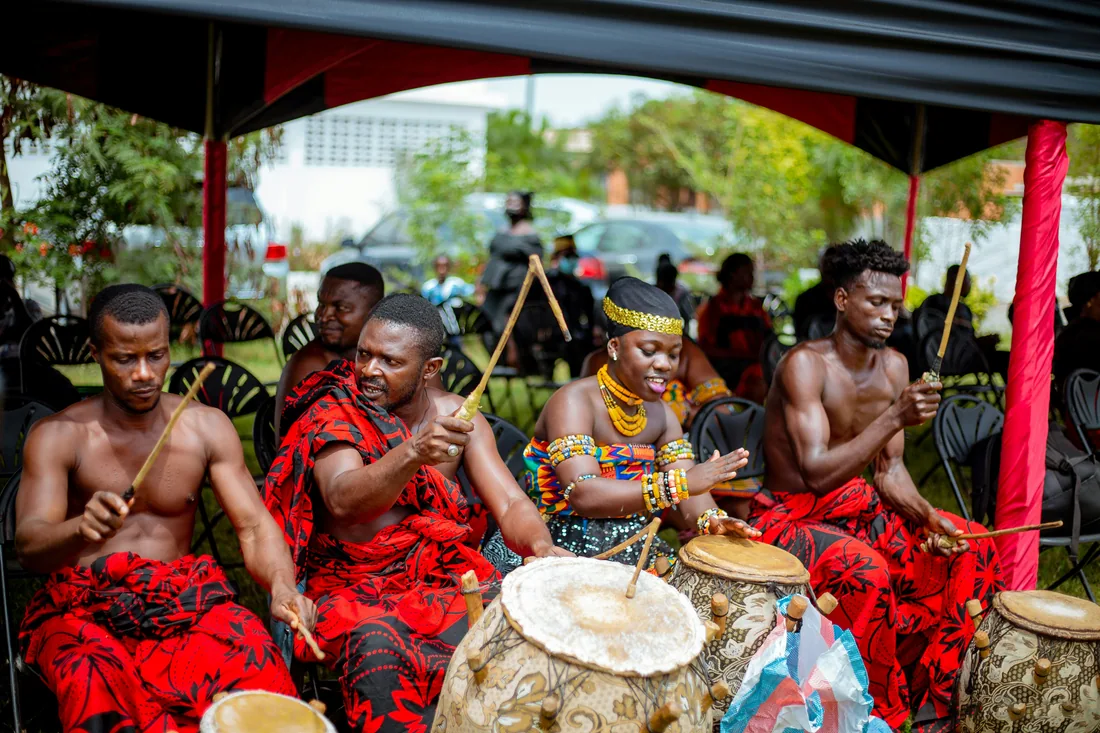
Because the drum leads, no two performances are ever identical. Learn to read the drum and you’ve learned the secret of nearly every dance below.
Traditional & ceremonial dances
Traditional Ghanaian dances are deeply regional — each ethnic group has its own repertoire, tied to specific occasions like funerals, festivals, weddings and the durbars where chiefs are honoured. Here are the ones you’re most likely to encounter.
From the Akan south (Ashanti, Central, Eastern)
- Adowa — the most widely recognised Akan dance. Graceful and dignified, it takes its name and gestures from the antelope; dancers use precise footwork and eloquent hand movements (often with a white handkerchief) to “speak” — pointing up to God, across to the ancestors, or to the ground. You’ll see it most at funerals and festivals.
- Kete — an elegant royal-court dance historically reserved for the Asante king’s palace and important state occasions, performed to its own suite of drums.
- Fontomfrom — a majestic royal and warrior dance driven by enormous talking drums; it projects power and is used to praise chiefs.
- Sikyi — a light, youthful flirtation dance created by young people — cheeky, playful and full of courtship energy.
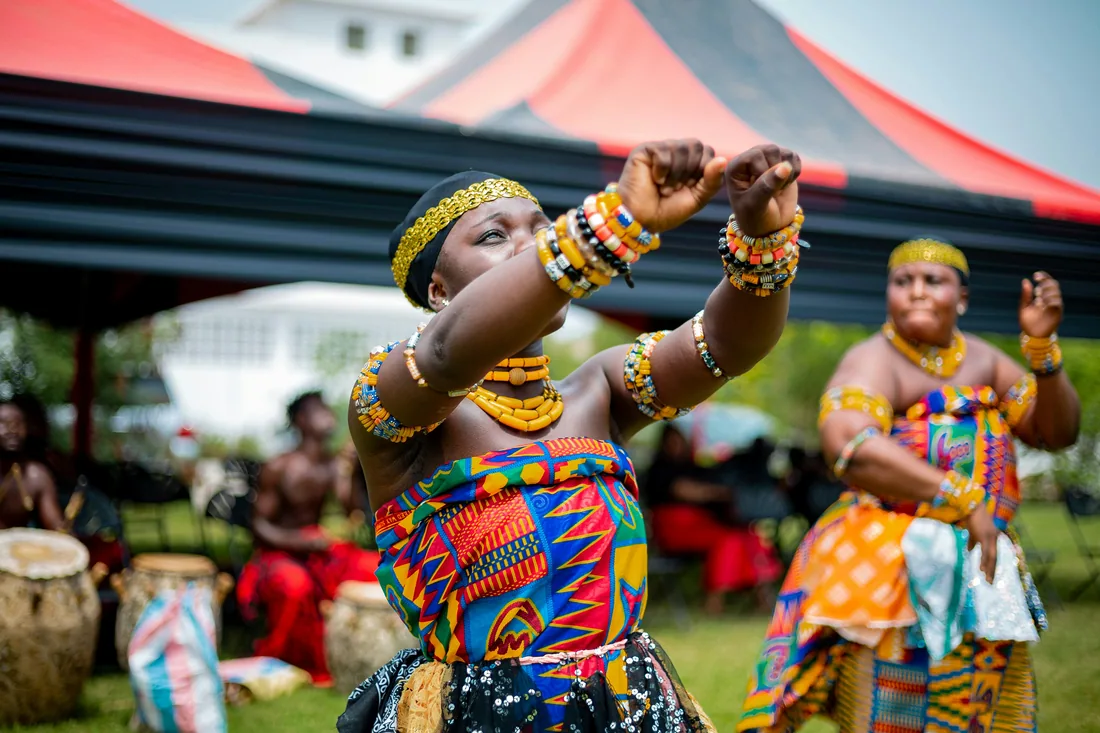
From the Ewe east (Volta Region)
- Agbadza — the signature Ewe social dance. It began as a war dance and evolved into a communal celebration; the classic move is a folding, bird-like flap of the arms and shoulders over a driving bell pattern. It’s everywhere at Ewe funerals and gatherings.
- Borborbor (Boboobo) — a joyful, colourful recreational dance from the central Volta towns, famous for its swaying lines, waving cloths and brass-tinged songs.
- Atsiagbekor — a spectacular, fast Ewe war dance full of sharp, athletic movements that once mimicked battle tactics.
From the Ga coast (Greater Accra)
- Kpanlogo — born in the streets of Accra in the 1960s, this recreational Ga dance is all about youthful freedom: bent knees, fluid waist and hip movements, and conga-style drumming. It’s the direct ancestor of much of Ghana’s modern street dance.
- Kolomashie & Gome — lively Ga processional and social dances; Gome is named after the big wooden box-drum the dancer often sits on to play.
From the north (Dagbon, Upper regions)
- Bamaya — a famous Dagbamba dance with a striking origin story: after a terrible drought, men dressed in women’s skirts and waist beads and danced to appease the heavens for rain. Today it’s performed with hip-swinging swagger, smocks and jingling waistbands.
- Damba — a stately festival dance of the northern chieftaincies, performed on horseback and on foot to celebrate the Damba festival and honour royalty.
- Takai — an energetic Dagbamba warrior dance where men circle and clash short metal rods in time with the drums.
- Nagla & Bawa — harvest and recreational dances from the Upper East and Upper West, tied to the farming calendar.
Contemporary Afro-dance & street styles
Ghana doesn’t just preserve dance — it invents it. The same drum-led, body-talks-back instinct now powers a street-dance scene that regularly sets the tone for global Afrobeats.
- Azonto — the one that went worldwide around 2011–2012. Built on Kpanlogo’s foundations, Azonto is a witty mime dance: over rhythmic knee bends and hip sways, dancers act out everyday life — washing, driving, boxing, praying, checking a watch. It turned into a global craze and put Ghanaian dance on the map.
- Alkayida — a looser, grooving follow-up with side-to-side sways and slick foot slides that swept West African street culture.
- The TikTok era — today Ghanaian dance crews and choreographers (the kind behind countless viral Afrobeats videos) keep churning out new moves that spread from Accra to the world in days. The instinct is the same one behind Adowa: hear the rhythm, answer with your body.
| Dance | People / Region | When it’s danced | The vibe |
|---|---|---|---|
| Adowa | Akan / Ashanti | Funerals, festivals | Graceful, storytelling hands |
| Kete / Fontomfrom | Asante royal court | State & chieftaincy events | Regal, powerful |
| Agbadza | Ewe / Volta | Funerals, gatherings | Flapping arms, communal |
| Borborbor | Ewe / Volta | Celebrations | Joyful, colourful, swaying |
| Kpanlogo | Ga / Greater Accra | Recreation, parties | Youthful, hip & waist |
| Bamaya | Dagbamba / North | Festivals, entertainment | Satirical, hip-swinging |
| Damba | Northern chieftaincies | Damba festival | Stately, royal |
| Azonto | Ga / modern Accra | Anytime, everywhere | Playful mime, viral |
Where to experience Ghanaian dance
You don’t have to hunt for it — but these are your best bets to see the real thing:
- Festivals — the single best place. Time your trip with Homowo (Ga, August), Hogbetsotso (Ewe, November), Damba (North), Aboakyer (Winneba) or Kundum (Western) and you’ll see dance in its true ceremonial context. See our guide to Ghana’s festivals.
- The National Theatre & the Ghana Dance Ensemble in Accra — professional performances of traditional repertoire from across the country.
- The W.E.B. Du Bois Centre and cultural centres — drumming-and-dance sessions and workshops where you can actually learn a few steps.
- Funerals and weddings — if you’re invited, go. Ghanaian funerals in particular are huge, dance-filled celebrations of life (more in our guide to Ghanaian funerals).
- Chale Wote and street festivals — where traditional and contemporary collide, especially in Accra.
The bottom line
Ghanaian dance is the culture in motion — the same values you feel in the drumming, the kente cloth and the music, expressed through the body. From the dignified hands of Adowa to the cheeky mime of Azonto, it’s all one long conversation between the drum and the dancer — and visitors are almost always invited to join in. So when the bell starts and someone waves you into the circle: don’t overthink it. Feel the rhythm, and move.
Sources & further reading
- Land Tours — The Rhythms of Traditional Ghanaian Dances
- Human Kinetics — Dance in Ghana
- Ghana Curriculum Resources (PE & Health) — traditional dances
- EasyTrack Ghana — Music, Dance & Ceremony overview
- Wikipedia — Ghanaian dances