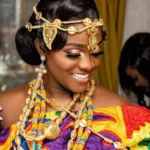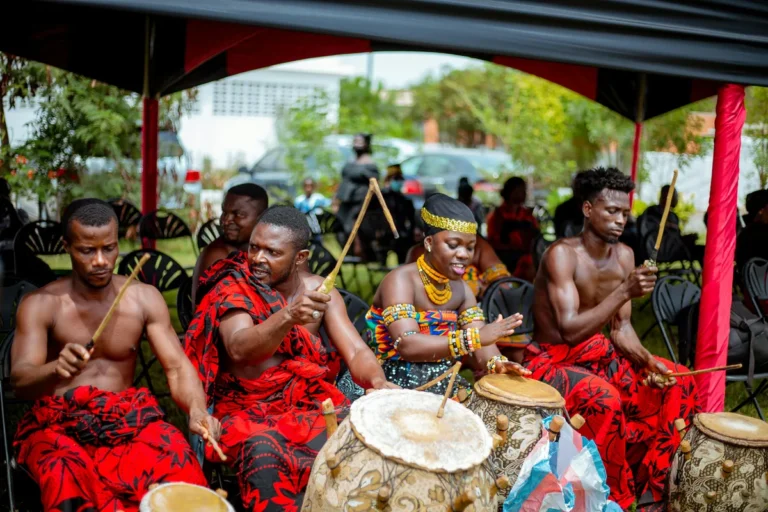
The first time a visitor stumbles on a Ghanaian funeral, the reaction is usually confusion: why is there a brass band, why is everyone dancing, and why does the coffin look like a giant fish? In Ghana, a funeral isn’t a quiet, sombre affair — it’s one of the biggest, most colourful and most important social events in the calendar, a full-blown celebration of a life lived. Funerals here can draw thousands, run for days, and cost more than weddings. Understanding why reveals something essential about how Ghana sees death, family and community. Here’s what’s really going on — and how to attend respectfully if you’re ever invited.
Why funerals are celebrations in Ghana
In Ghanaian (especially Akan) belief, death is not an ending but a transition — the deceased joins the ancestors, who remain part of the living community. A funeral, therefore, is both a farewell and a joyful send-off: a chance to honour the person, give them a dignified passage, and reaffirm the bonds of the extended family. The bigger the turnout and the grander the celebration, the greater the respect shown. Grief is real and present, but it sits alongside music, dancing, feasting and reunion. For many families, the funeral is the most significant event they will ever host.
The colours: red, black and white
You can read a Ghanaian funeral by its cloth. Mourners traditionally wear red and black — the colours of grief and loss — often in specially made matching outfits so the family appears as a unified body. When the deceased lived a long, full life and died in old age, white (or white-and-black) may be worn instead, signalling celebration rather than sorrow. The coordinated dress is striking, deliberate, and a core part of the spectacle.
The famous fantasy coffins
Ghana’s most extraordinary funeral tradition is the fantasy coffin (or “abebuu adekai” — proverb boxes), pioneered by carpenters in the Ga coastal area around Teshie, near Accra. These bespoke coffins are sculpted to represent the deceased’s life, trade or dreams: a fisherman buried in a giant fish, a driver in a Mercedes, a farmer in a cocoa pod, a chief in a lion. They’re genuine works of art, exhibited in galleries abroad, yet made first and foremost to honour a life. Visiting a Teshie coffin workshop is a fascinating (and surprisingly uplifting) Accra experience — see our designer coffins guide.
The stages of a Ghanaian funeral
A funeral is rarely a single day — it’s a sequence, often stretched over weeks or months while the family prepares (and saves).
| Stage | What happens |
|---|---|
| One-week celebration | A gathering about a week after death to announce it and begin mourning |
| Wake-keeping | An all-night vigil before the burial, with music, prayers and viewing of the body |
| Burial | The funeral service and interment, often a Saturday |
| Thanksgiving | A church service (often Sunday) giving thanks and closing the rites |
| 40-day / one-year rites | Memorial observances marking later milestones |
Weekends — especially Saturdays — are funeral days across Ghana, which is why you’ll see whole neighbourhoods in red and black and canopies set up along the roadside.
The scale, the spectacle and the cost
Ghanaian funerals are big. Families hire canopies, chairs, sound systems, brass or “borborbor” bands and caterers; print commemorative cloth, posters and programmes; and feed hundreds or thousands of guests, many of whom the deceased never met (attending funerals is a community duty). It’s common to spend more on a funeral than on a wedding — sometimes to the point of debate about the financial strain. Guests typically donate money to support the bereaved family, a contribution that’s carefully recorded. For better or worse, the funeral economy is a serious part of Ghanaian life.
Attending a funeral as a visitor
Funerals are surprisingly open — turning up to pay respects is welcomed, and you may well be invited. A few pointers if you go:
- Wear the right colours — black, or red-and-black; ask the family if unsure. Avoid bright, casual clothing.
- Greet the bereaved family first and offer condolences; a donation (in an envelope) is customary and appreciated.
- Follow the lead of others — sit where directed, stand for processions, and join the mood, sombre or celebratory.
- Ask before photographing, and be respectful around the body and rituals.
- Use your right hand for greetings and giving, as always (see our etiquette guide).
The bottom line
A Ghanaian funeral is one of the most revealing windows into the culture: a place where grief and joy share the same canopy, where a life is honoured with brass bands, red cloth and a coffin shaped like a fish, and where the whole community shows up to carry a family through loss. Far from morbid, it’s profoundly life-affirming. If you’re invited, go — respectfully, in the right colours, with a contribution and an open heart — and you’ll understand Ghana in a way no monument can teach. Explore more in our Ghanaian culture and designer coffins guides.