In a workshop in the Accra suburb of Teshie, a carpenter is sanding a giant wooden fish, painted in gleaming scales. Next to it: a Mercedes-Benz, a Bible, a cocoa pod, a sneaker — all coffins. These are Ghana’s famous fantasy coffins, bespoke caskets sculpted to celebrate the life, trade or dreams of the person inside, and they’re one of the most extraordinary art forms anywhere in the world. Born from the Ga funeral tradition, they’ve travelled from coastal Accra to museums in Paris and New York. Here’s the story, and where to see them.
What are fantasy coffins?
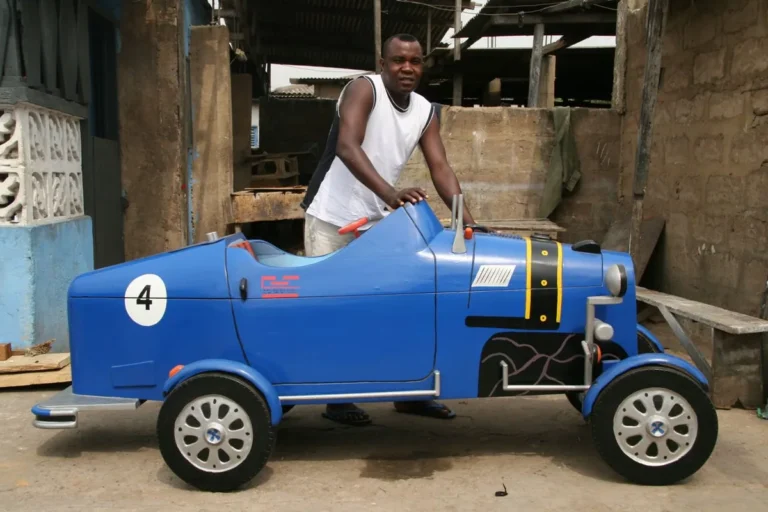
Known in the Ga language as abebuu adekai (“proverb boxes” or “receptacles of wisdom”), fantasy coffins are custom-built caskets shaped to represent something meaningful about the deceased — a fisherman buried in a fish, a driver in a car, a chief in a lion, a farmer in a cocoa pod, a seamstress in a sewing machine. Far from morbid, they’re a joyful, dignified send-off, perfectly in keeping with the Ghanaian view of funerals as celebrations of life.
The Teshie tradition
The art form emerged in the mid-20th century among the Ga people of the coastal Accra area, especially Teshie, and is credited largely to the carpenter Kane Kwei, whose workshop trained a lineage of master coffin-makers. His successors — including Paa Joe and Eric Adjetey Anang — have become internationally celebrated artists, with their work exhibited and collected around the world while still being made, first and foremost, to bury loved ones at home.
How (and why) they’re made
Each coffin is hand-built to order, usually in soft wood, then carved, smoothed and brightly painted — a process that can take weeks. The shape is chosen by the family to honour the person’s life, profession or aspirations, often carrying a proverb or symbolic meaning. A finished fantasy coffin can cost a significant sum, reflecting both the craftsmanship and the importance Ghanaians place on giving the dead a worthy farewell.
Where to see them
The best place is the source: the coffin workshops of Teshie, on the eastern side of Accra, where you can watch the carpenters at work and see finished pieces — fish, cars, animals, bottles, fruit — lined up like a surreal gallery. Several workshops welcome respectful visitors (a small fee or tip is appreciated). It’s a genuinely uplifting, only-in-Ghana experience, and an easy, fascinating half-day from central Accra (see our things to do in Accra guide).
Tips for visiting
- Go to Teshie in eastern Accra; ask for the coffin workshops (the Kane Kwei lineage is the famous one).
- Be respectful — these are made for real funerals, not just as curiosities.
- Ask before photographing, and tip or buy a small carving to support the artisans.
- Combine it with a Jamestown or Accra city day.
- Carry small cash for fees and tips.
Reading the coffins
A fantasy coffin isn’t random — the shape is a biography. These are the designs you’ll see most, and what they tell you about the person inside.
| Design | Who it’s made for / what it says |
|---|---|
| Fish or canoe | A fisherman, or a life by the sea |
| Cocoa pod | A cocoa farmer — Ghana’s cash crop |
| Lion or leopard | A chief, elder or someone of great authority |
| Aeroplane or car | A traveller, trader, or a dream of going abroad |
| Bible or church | A devout Christian or church elder |
| Hen with chicks | A mother — the family she leaves behind |
| Bottle, phone, shoe | The trade, brand or passion that defined them |
The bottom line
Ghana’s fantasy coffins are where art, craft and the country’s joyful approach to death collide — a fish, a car or a cocoa pod, lovingly built to send a life off in style. Visit the Teshie workshops to watch the masters at work, and you’ll understand the Ghanaian funeral like nothing else. Pair it with our Ghanaian funerals and culture guides.