Ask anyone who has spent time in Ghana what stayed with them, and they rarely mention a monument first. They mention the people — the stranger who walked them to the right tro-tro, the auntie who insisted they eat before leaving, the chorus of children shouting a delighted greeting down the street. Ghana is regularly named one of the friendliest countries in Africa, and it isn’t marketing. Warmth here is a discipline, a code, an inheritance. It even has a name you’ll hear within minutes of landing: Akwaaba — welcome.
Akwaaba is more than a word
Akwaaba is Twi for “welcome,” and in Ghana it functions less like a greeting and more like a promise. You’ll see it spelled out in mosaic at the airport, painted over shop doors, printed on cloth. Behind it sits a genuine cultural conviction that a guest — Ōhoho — is a blessing to be honoured, not a burden to be managed. Turn a visitor away hungry or unhelped and it’s not just rude; it’s a small failure of who you are. Read the fuller story of what Akwaaba really means and you’ll understand why the whole country seems to run on it.
“You are invited”
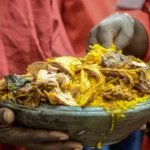
Here is the custom that startles most first-time visitors. Walk past anyone in Ghana while they’re eating — a colleague at their desk, a family on a stoop, a group around a shared bowl — and they will look up and say, “You are invited.” It is not a hollow pleasantry. Sharing food is the deepest reflex of Ghanaian hospitality: the idea that no one should eat while another watches. You needn’t accept a full meal (a warm “thank you, I’ve eaten” is perfectly polite), but understand what’s happening — you are being folded, however briefly, into the circle.
Greetings are sacred
In Ghana you greet before you do anything else. Before you ask directions, before you bargain, before you launch into business — you say good morning, you ask after someone’s health, their family, their night’s sleep. Skipping the greeting to get straight to your request reads as cold, even disrespectful. A few things worth knowing:
- When greeting a group, it’s traditional to move from your right to left.
- Offer and receive things — money, gifts, food — with your right hand (or both hands). The left hand alone is considered impolite.
- Elders come first, always. A younger person greets an older one, and titles like Auntie, Uncle, Nana and Bra/Sista are used warmly even with strangers.
Master even a few local words — our Twi phrases guide is a head start — and watch how instantly faces light up. For the full playbook, see our Ghana etiquette guide.
It takes a village — literally
Ghanaian hospitality flows from a communal worldview. The extended family is the basic social unit, not the household; children are raised by aunties, uncles, grandparents and neighbours as much as by parents. That sense of collective responsibility spills outward to guests and strangers, too. Fall ill far from home and someone’s mother will appoint herself your carer. Get lost and a passer-by won’t just point — they’ll walk you there. This is the quiet engine beneath the friendliness: in Ghana, you are never really on your own.
The stranger is family
Nowhere is this warmth more visible than in how Ghanaians treat outsiders. Foreign visitors — often greeted with the affectionate obroni (roughly, “foreigner”) — are routinely swept into weddings, funerals, naming ceremonies and Sunday lunches they only wandered near. During the landmark Year of Return in 2019, Ghana invited the global African diaspora “home” after 400 years, and hundreds of thousands came — drawn not by beaches alone but by the promise of belonging. That campaign worked because it was true to something Ghana already was.
Celebrations with the doors open
Ghanaian social life runs on gatherings — and they are gloriously inclusive. A funeral (which in Ghana is as much a joyous send-off as a mourning) can host hundreds, many of whom never met the deceased. Naming ceremonies, outdoorings, weddings, festivals and church services all operate on the same logic: the more the merrier, and a guest brings honour. If you’re invited to one, go — bring a small gift or a contribution, dress respectfully, and prepare to be fed relentlessly. Our guide to Ghanaian culture and its dances will help you read the room.
How to receive Ghanaian hospitality well
Warmth is a two-way street. A few gentle pointers so you can meet it gracefully:
- Accept the water. Guests are often offered a glass or sachet of water on arrival — it’s a ritual of welcome. Take it, even a sip.
- Greet everyone. Enter a room and acknowledge the whole group, elders first.
- Reciprocate. A small gift when visiting a home — fruit, drinks, something from your country — is always appreciated, never expected.
- Say yes to the food. If you can, eat. Refusing outright can disappoint a host who has given you their best.
- Slow down. Hospitality here is unhurried. Let the conversation breathe.
How to receive it well
Ghanaian warmth comes with quiet expectations. Here’s how to read the most common gestures — and reciprocate like someone who gets it.
| You’ll experience this | What it means | How to respond well |
|---|---|---|
| “You are invited” at a meal | A genuine offer to share food | Accept a taste, or decline warmly with thanks — never ignore it |
| A drink of water on arrival | A traditional welcome to a guest | Receive it with your right hand; a sip honours the gesture |
| Long, unhurried greetings | Respect — rushing is rude | Greet from the right, ask after family, don’t skip to business |
| Being called “my sister/brother” | You’re treated as family | Use it back warmly; it’s affection, not a sales line |
| An open door at a funeral or party | Strangers are welcome guests | Dress respectfully, greet the hosts, a small gift is kind |
The bottom line
Ghana’s reputation as one of Africa’s warmest, safest and most welcoming countries isn’t an accident of temperament — it’s a culture that has decided, deliberately, that people matter most. You’ll arrive a stranger and leave feeling like family. That’s the real souvenir. (And yes, Ghana is also a very safe place to visit — the friendliness is genuine, not a hustle.) Akwaaba.