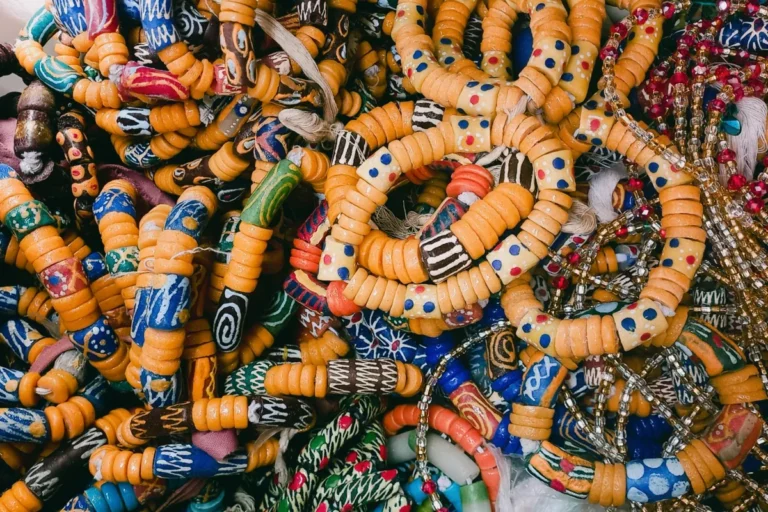
Every Thursday, the town of Koforidua in the Eastern Region hosts one of West Africa’s great treasures: a vast bead market, where tables overflow with strings of glass beads in every colour imaginable. Beads are woven deep into Ghanaian culture — worn at naming ceremonies, puberty rites, weddings and funerals — and the Krobo people of this region are the master beadmakers, transforming recycled glass into wearable art. Here’s a guide to buying beads in Koforidua and the Krobo bead country, what to look for, and what to pay.
The famous Thursday bead market
Koforidua’s bead market (locally “Kofↄridua”) runs every Thursday and is the largest in the country — sellers come from across the Krobo bead-making heartland with thousands of strands: recycled-glass “powder glass” beads, old European trade beads (Bodom, chevrons, millefiori), Krobo painted beads, bauxite and brass. It’s a riot of colour and the single best place to buy beads in Ghana, at the best prices. Get there in the morning for the fullest choice.
Krobo bead country
The beads come from the Krobo area around Odumase-Krobo and Somanya in the Eastern Region, the traditional centre of Ghanaian glass-beadmaking. Here you can visit workshops — the famous Cedi Beads among them — to see the whole process: bottles and glass crushed to powder, packed into clay moulds with designs, fired in wood kilns, then shaped, polished and strung. It’s a fascinating, hands-on visit and many workshops let you try making your own (see our Eastern Region guide).
What to buy
| Bead type | Note |
|---|---|
| Powder-glass beads | Made from recycled glass — the Krobo specialty |
| Painted Krobo beads | Hand-painted designs, very colourful |
| Old trade beads | Antique European Bodom, chevrons, millefiori |
| Bauxite & brass | Earthy, traditional accents |
What to pay
Simple glass-bead bracelets go for around GH₵10–40, fuller necklaces GH₵30–120, with antique trade beads and elaborate pieces costing more. Prices at the Koforidua market and Krobo workshops are far better than tourist stalls in Accra. Bargaining is expected but gentle — see our souvenir price guide.
Tips for buying beads
- Go on a Thursday for the Koforidua market; arrive in the morning.
- Visit a Krobo workshop (e.g. Cedi Beads) to buy direct and see the craft.
- Bargain kindly and buy several strands for a better rate.
- Ask the meaning — bead colours and types carry cultural significance.
- Cash or MoMo only; carry small notes.
Getting there & making the most of Thursday
The bead market is the reason to time this trip carefully. It runs on Thursdays at Koforidua, roughly 1.5–2 hours north of Accra by road (trotro from the Accra terminals, a chartered taxi, or a Bolt for a group). Go early — traders set up in the morning and the best strands and rarest colours move fast, so arriving by mid-morning beats both the crowds and the midday heat.
Knowing what you’re looking at helps you buy well. Most of what you’ll see is Krobo powder-glass and recycled-glass beads, made by grinding glass, packing it into clay moulds and firing it — the technique behind the region’s reputation. You’ll also find old bodom beads, translucent “sea-glass” recycled beads, and Venetian trade beads. Prices swing from a few cedis for a simple strand to serious money for antique or collector beads, so it’s worth walking the whole market before committing.
Bargaining is expected and friendly — start below the asking price, buy several strands together for a better rate, and keep small cash and mobile money handy, as few traders take cards. If Thursday doesn’t fit your route, some Krobo workshops around Odumase-Krobo sell year-round and will show you the firing process. Either way, pair it with the wider what-to-buy-in-Ghana guide so you know a fair price before you haggle.
The bottom line
For beads, time your trip to Koforidua’s Thursday market and add a Krobo workshop visit — together they’re the source of Ghana’s glass-bead artistry, at the best prices, with the story of recycled glass becoming wearable heritage. Buy direct, bargain gently, and ask what the colours mean. Plan it with our shopping and Eastern Region guides.