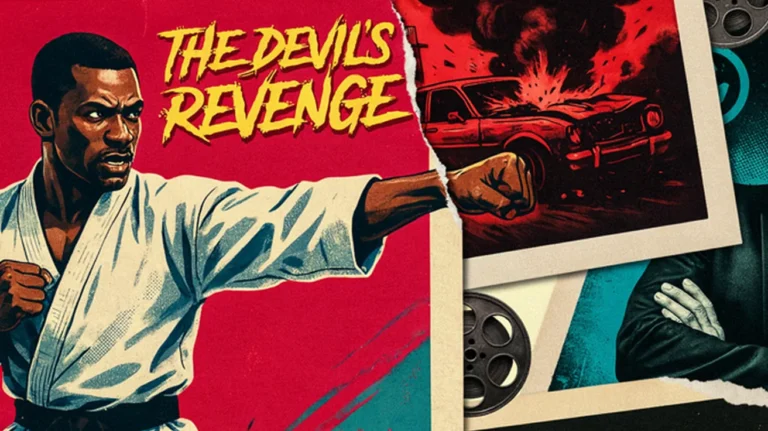
Imagine you have paid good money to see The Spy Who Loved Me because the poster outside the cinema promised a colossal, furious red fish. An hour in, no fish. You would, quite reasonably, want your money back. Welcome to the gloriously unhinged world of Ghanaian movie posters — where Hollywood blockbusters were hand-painted by local artists who watched the films, ignored most of what they saw, and added snakes, guns and the occasional decapitation for good measure.
These hand-painted posters recently went viral all over again after a love-letter of a segment on Last Week Tonight with John Oliver, but Ghanaian artists have been doing this for decades. They are some of the most joyful, chaotic and genuinely brilliant pieces of pop art on the planet — and they are pure Ghana. Let’s look at a few, then get into how this wonderful tradition came to be.
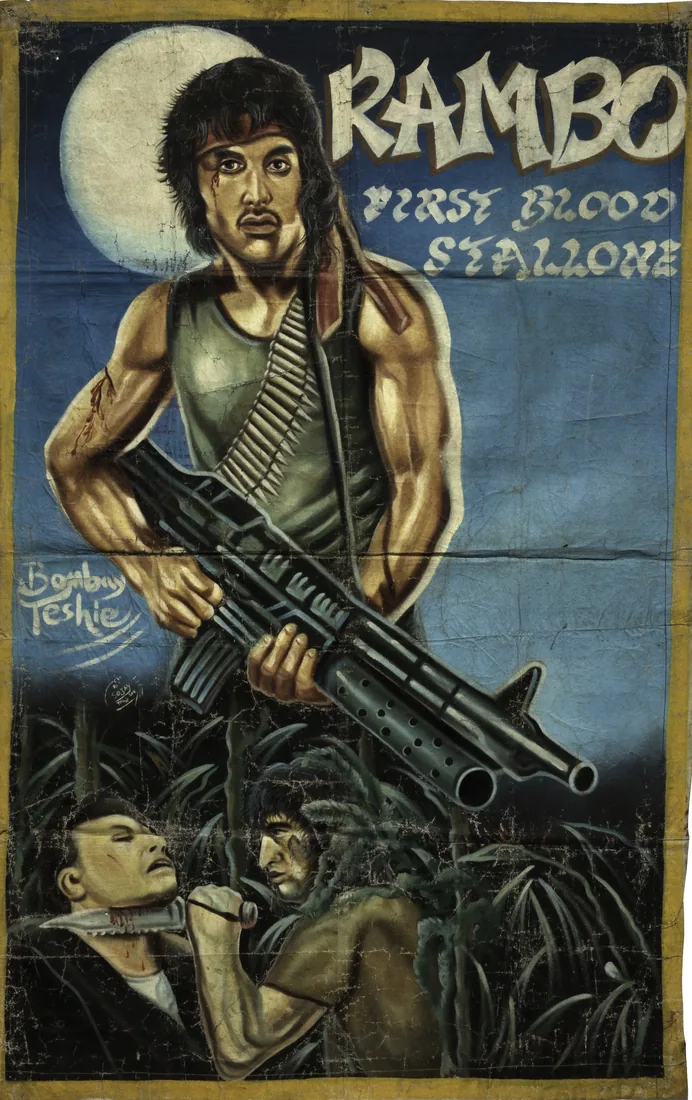
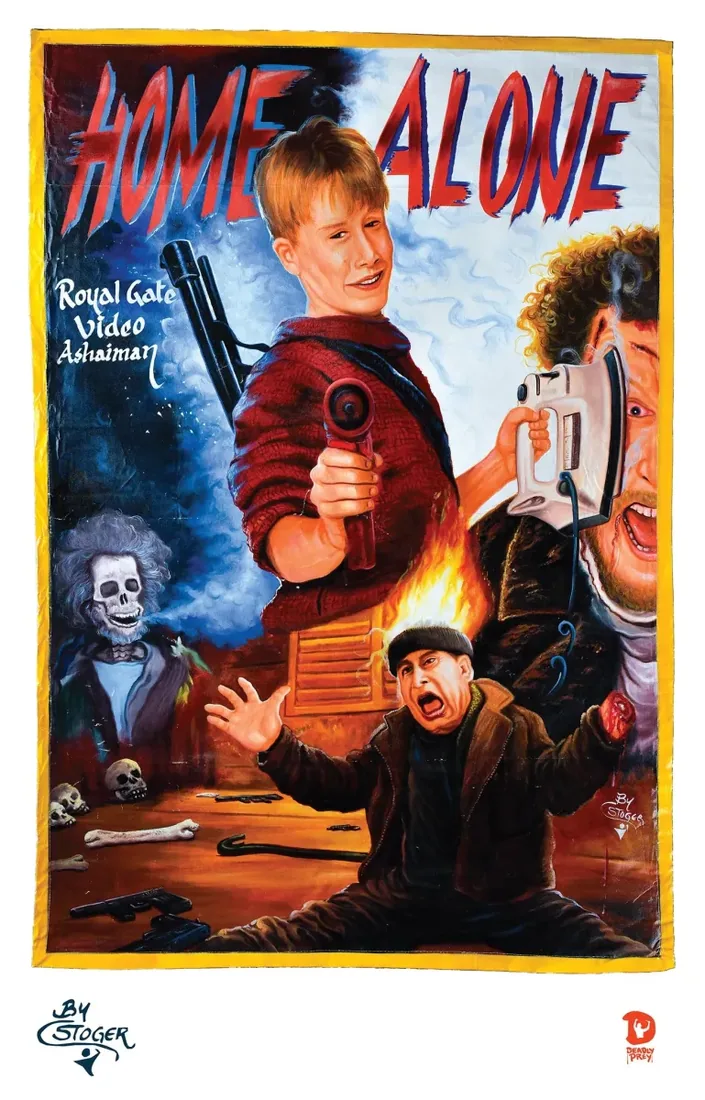
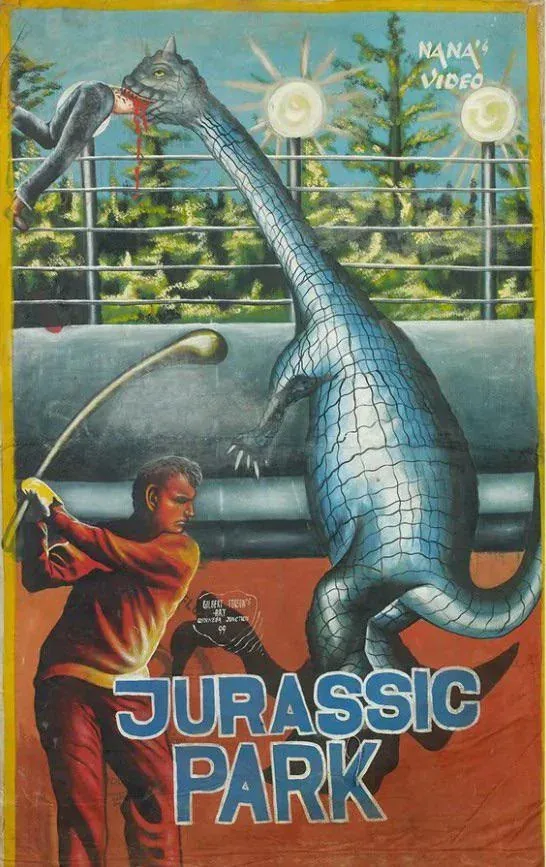
So… what am I actually looking at?
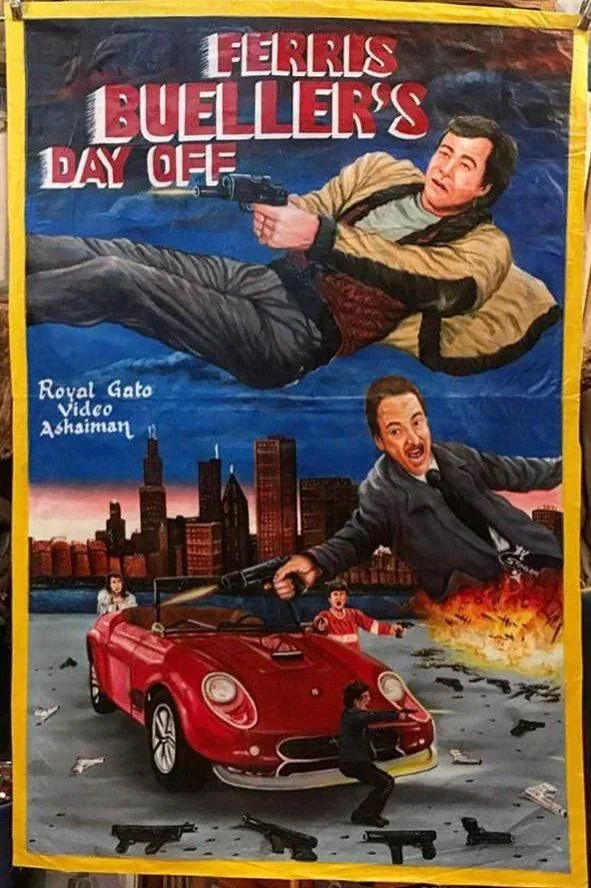
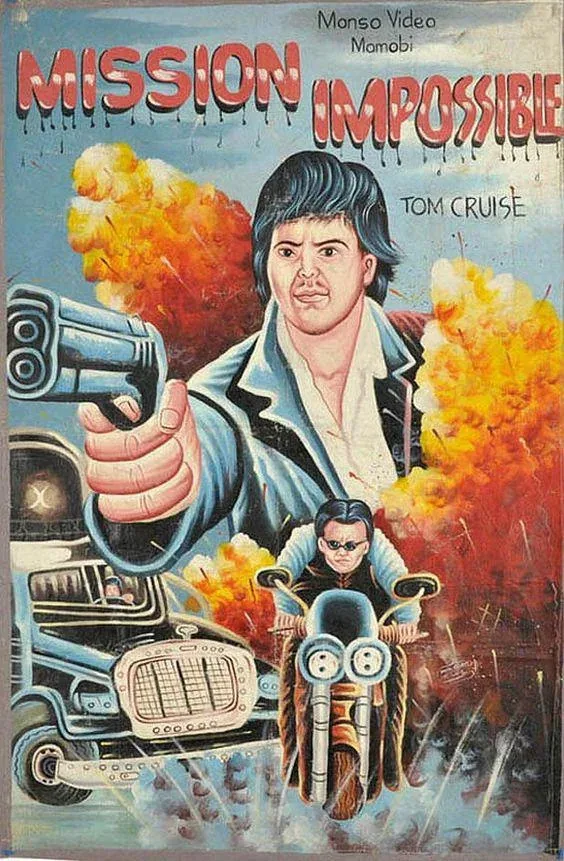
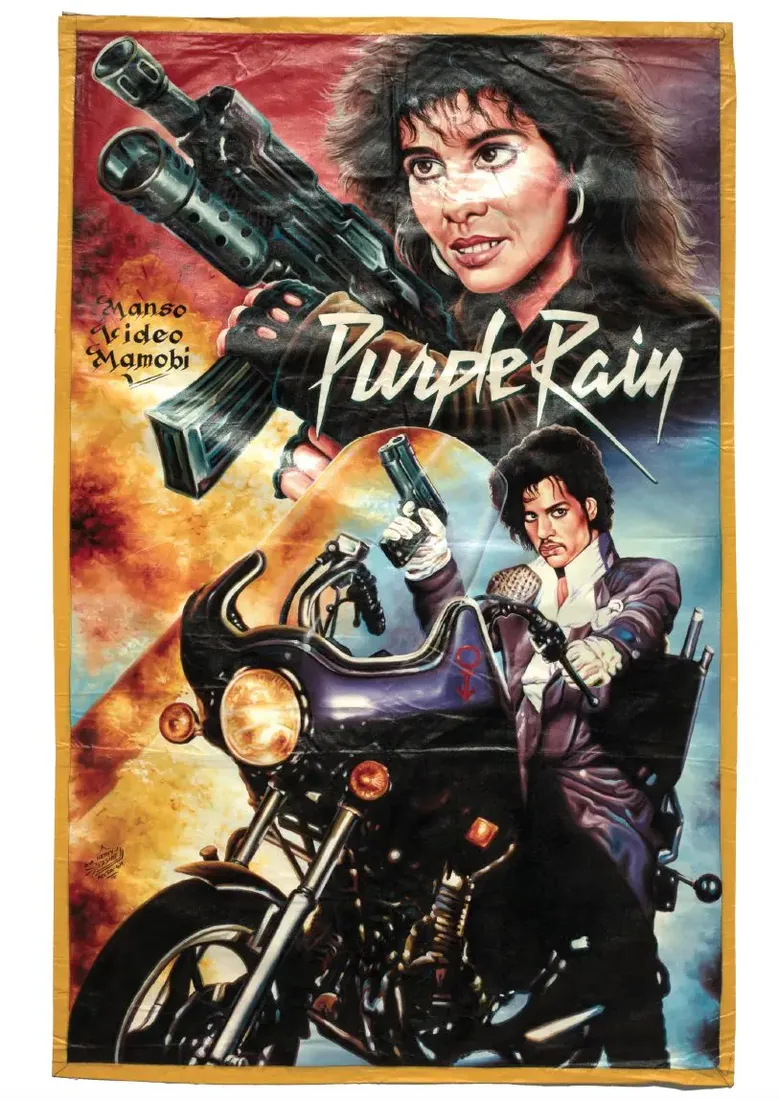
From roughly the 1980s onward, Ghanaian sign-painters produced their own posters to advertise foreign films — usually painted in bold poster colours on stitched-together flour sacks, because canvas was a luxury. The brief was loose to the point of non-existent: make people want to come in. So the artists watched the movie, picked the most exciting moments, and then, crucially, invented several more exciting moments that were not in the movie at all.
Why Ghana started hand-painting Hollywood
There is a brilliant, very practical reason behind all of this. In the 1980s, cheap foreign VHS tapes flooded into Ghana and sparked a mobile-cinema boom. Enterprising operators bought a TV, a VCR and a petrol generator, loaded the lot into a vehicle, and drove from village to village — setting up pop-up cinemas in places that often had no mains electricity.
The catch was advertising. Ghana was under military rule at the time, and the import restrictions of the era meant the big offset printing presses you would normally use for posters simply were not available. No presses, no printed posters. So the operators did the obvious thing: they hired local painters to make a one-of-a-kind poster for every screening, by hand. When the show moved town, the poster rolled up and travelled with it.
Because each poster was a unique advert rather than an official studio product, the artists had near-total creative freedom — and they used every drop of it.
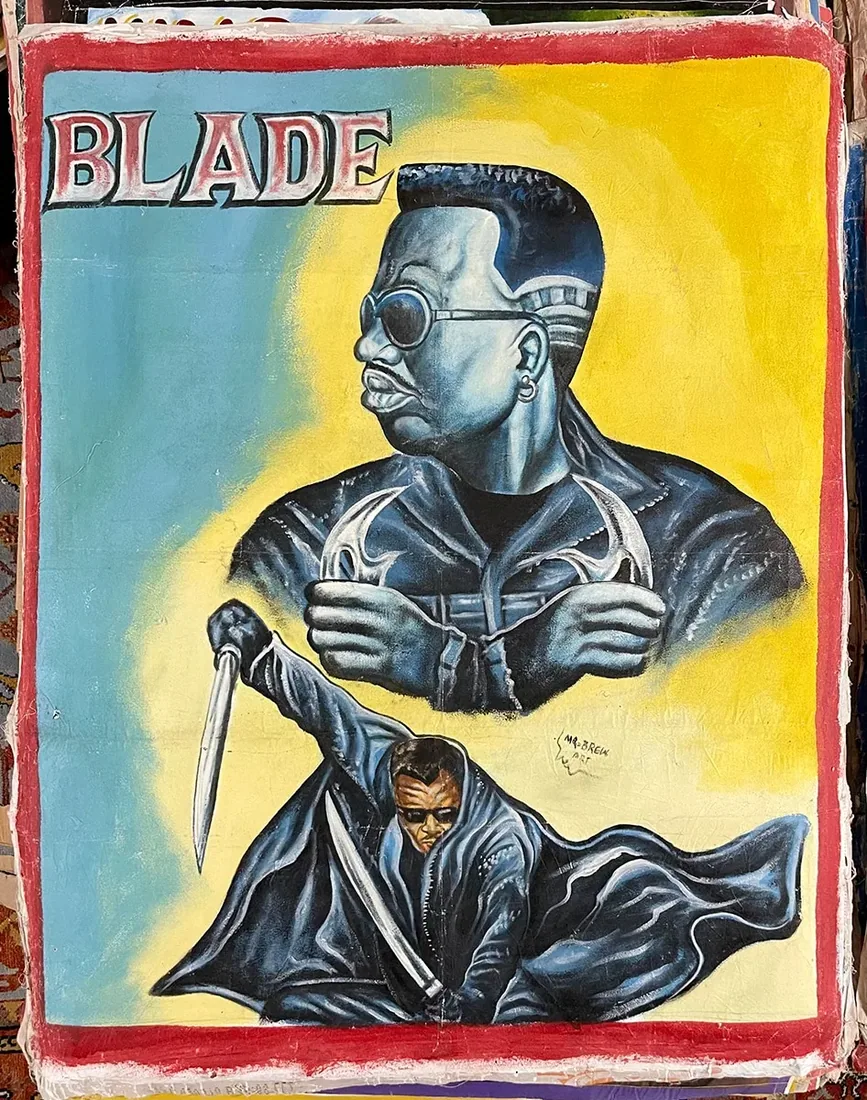
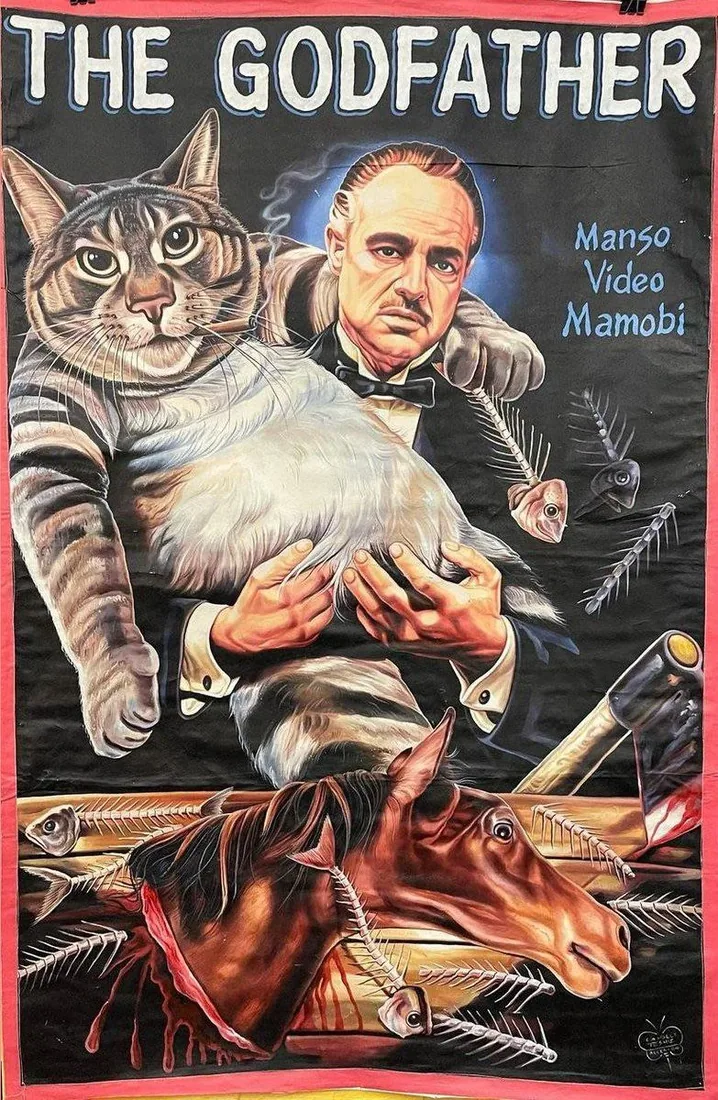
The house style: more snakes, more guns, more everything
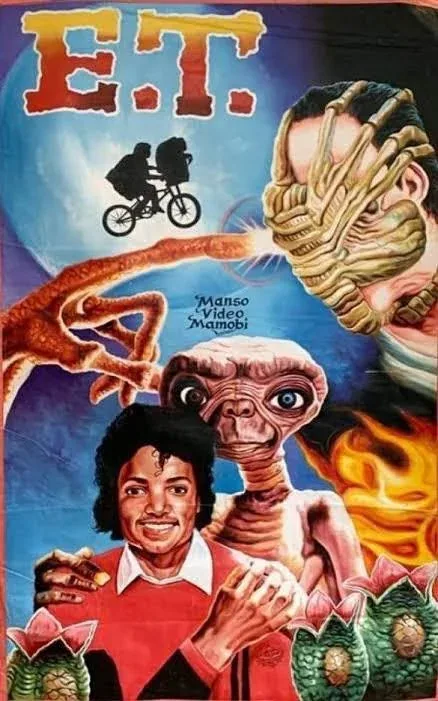
Once you have seen a few, the recurring motifs jump out. Snakes appear constantly, often in films with no snakes. Guns multiply. Characters who were never in the movie wander into frame. Gentle family films are reimagined as splatter horror. The painters were not being careless — they were selling a feeling, and the feeling was you absolutely cannot miss this.
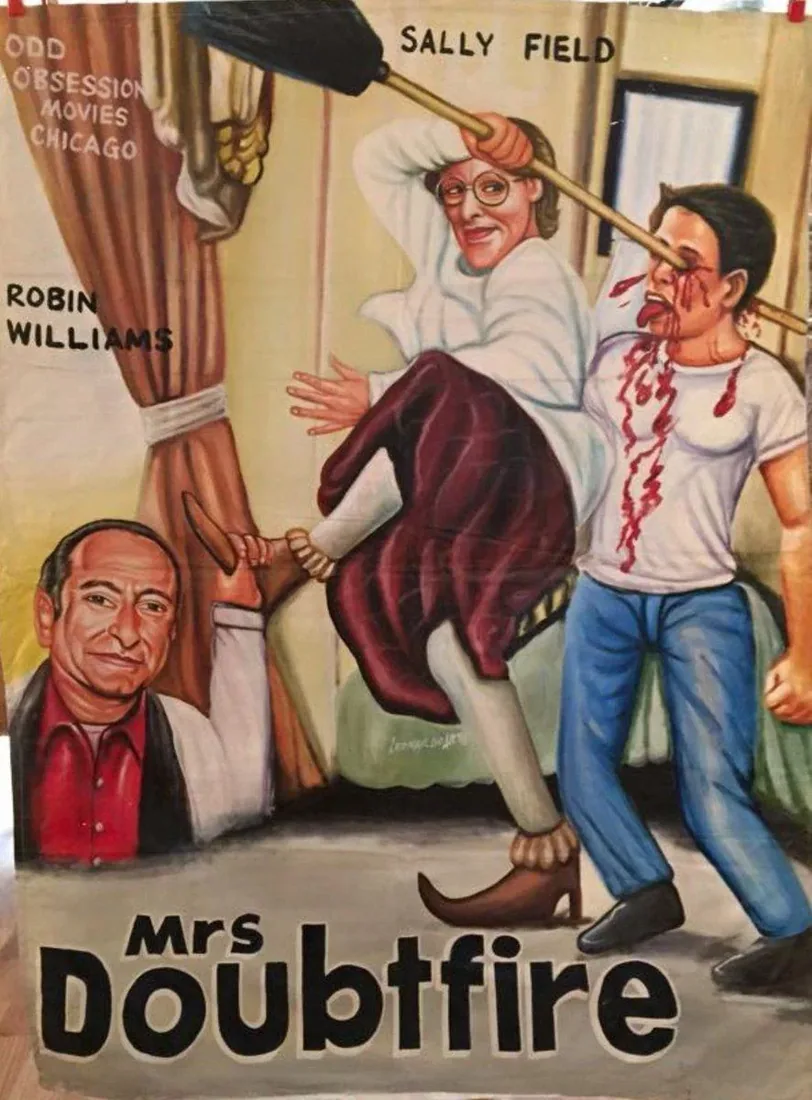
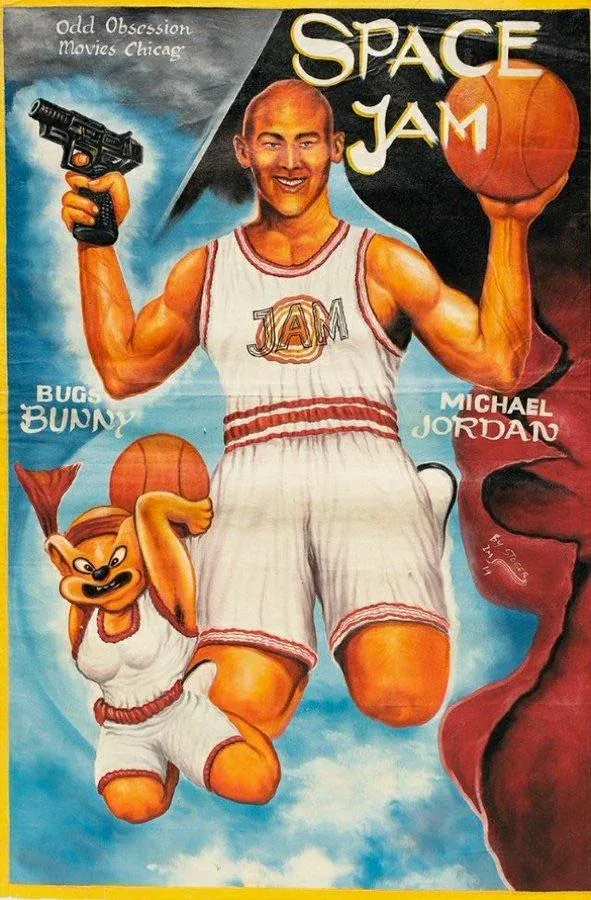
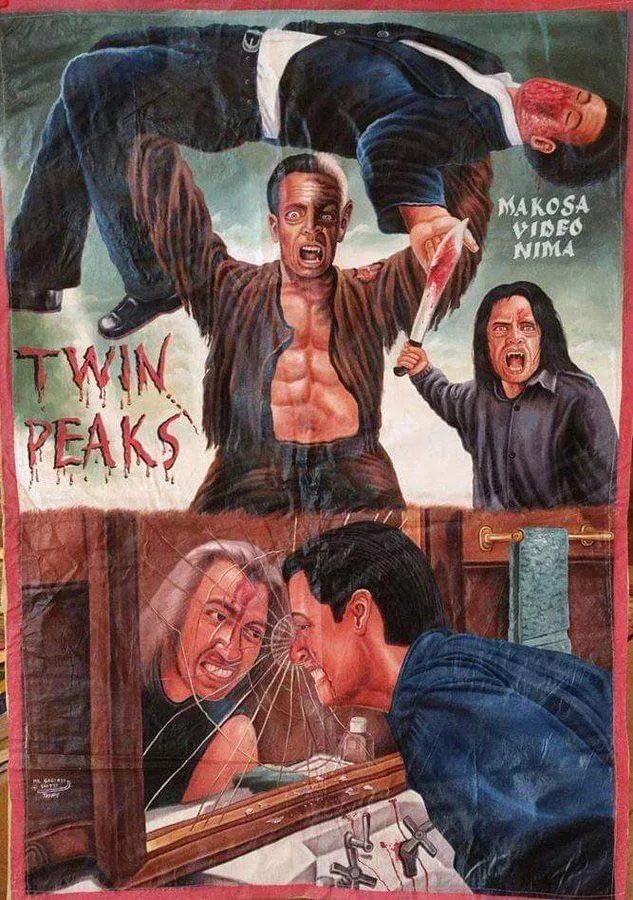
This freewheeling approach was great for ticket sales and occasionally terrible for customer relations. Painters have cheerfully admitted to advertising fights, monsters and stars that never appeared on screen — and to making a swift exit when disappointed audiences came looking for a refund.
| The film | What’s actually in it | What the poster promised |
|---|---|---|
| Home Alone | A boy defends the house with paint tins | A heavily armed child, skeletons, open flame |
| Jurassic Park | Dinosaurs | A man golfing |
| The Godfather | A mafia dynasty | A don and one very large cat |
| E.T. | A gentle little alien | The alien, plus Michael Jackson, plus a mummy |
| Mrs Doubtfire | Robin Williams in a dress | Robin Williams, but make it horror |
From flour sacks to gallery walls
When the dictatorship ended and cheap printing and home TVs arrived, the mobile-cinema scene faded and so did demand for the painters. Many of these enormously talented artists had to put down the brush and take ordinary jobs.
Then the world caught up. Over the last decade or so, collectors, galleries and the internet rediscovered the form. Galleries now commission Ghanaian artists to paint brand-new posters — often of films that have absolutely nothing to do with action — for fans around the world. The tradition that started as a hustle in villages without electricity is now hanging in galleries and living rooms from Accra to New York.
Where to see (and buy) Ghanaian movie posters
If you fall down this rabbit hole — and you will — the best-known home for these works is the Deadly Prey Gallery, which represents many of Ghana’s top poster artists and sells both vintage and newly commissioned pieces. Visiting Ghana? Accra’s art scene is thriving: pair this with our guides to the best art galleries in Accra and the bustling Accra Arts Centre for souvenir hunting, and you’ll start spotting that distinctive hand-painted style everywhere.
It is one more reminder that Ghanaian creativity refuses to stay in a box — the same spirit you feel in our guide to Ghanaian culture and across the best things to do in Accra.
The bottom line
Ghanaian movie posters are what happens when you hand a brilliant artist a blank flour sack, a movie they have half-watched, and total permission to improvise. The result is funnier, weirder and more alive than almost any official poster ever printed. Long may the snakes, the extra guns and the surprise cats continue.
Sources & image credits
- CNN — Ghana’s hand-painted film posters
- Harman Projects / Deadly Prey Gallery — Movie Posters from Ghana
- Hi-Fructose — The Evolution of the Hand-Painted Movie Posters of Ghana
- Deadline — Ghana movie posters of Hollywood blockbusters
- r/interestingasfuck — Movie posters from Ghana
- History and examples drawn in part from the Last Week Tonight with John Oliver segment on Ghanaian movie posters (HBO).