The stretch of coast around Cape Coast and Elmina is the most powerful few hours you’ll spend in Ghana — and for many diaspora travellers, the entire reason for the journey. This is where the transatlantic slave trade left its starkest monuments: whitewashed castles above the surf, dungeons below, and the Door of No Return opening straight onto the Atlantic. But the Central Region is more than its history; it pairs that weight with the rainforest canopy of Kakum and a string of easy beaches. Here’s how to visit thoughtfully and make the most of it.
The Central coast at a glance
| Site | What it is | Time needed |
|---|---|---|
| Cape Coast Castle | UNESCO slave-trade fortress & museum; Door of No Return | 1.5–2 hrs |
| Elmina Castle | Oldest European building in sub-Saharan Africa (1482) | 1.5–2 hrs |
| Kakum National Park | Rainforest canopy walkway, 40m high | Half day |
| Assin Manso | Slave river site & ancestral memorial | 1–2 hrs |
| Beaches | Brenu Akyinim, Anomabo & the central coast | Half/full day |
Cape Coast Castle — the heart of it
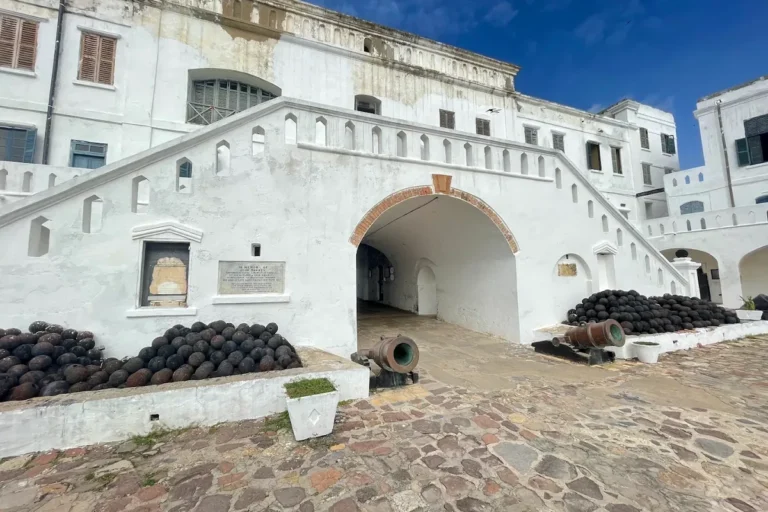
A UNESCO World Heritage Site, Cape Coast Castle is the largest of the coast’s slave-trade fortresses. A guided tour — essential, and usually 60–90 minutes — takes you through the cramped, lightless slave dungeons, the stark contrast of the governor’s quarters and the chapel built directly above the suffering below, and finally the Door of No Return, the narrow passage to the waiting ships. Inside, the West African Historical Museum holds shackles, documents and artefacts that deepen the story. It is sobering, unforgettable, and the most important thing you can do in Ghana. The castle is generally open daily (roughly 9am–4:30pm); go with a guide and leave emotional room for the rest of the day.
Elmina Castle — older, and just along the coast
Twenty minutes west, Elmina Castle (St. George’s) was built by the Portuguese in 1482, making it the oldest surviving European building south of the Sahara. Like Cape Coast, it served as a holding and shipping point in the slave trade, and its dungeons and Door of No Return tell the same wrenching story from a different vantage. Set above Elmina’s busy, photogenic fishing harbour, it pairs naturally with Cape Coast — most visitors do both, either in one intense day or split across two.
Kakum’s canopy walk — the other side of the coin
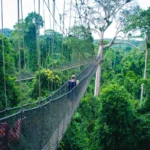
About 30–45 minutes inland, Kakum National Park offers a complete change of mood: a famous canopy walkway of seven rope-and-plank bridges strung 40 metres above the rainforest floor. It’s a genuine thrill and a beautiful counterweight to the castles’ heaviness. Go early to beat both the heat and the tour groups; the forest below shelters elephants, monkeys and hundreds of bird species, though the walkway itself is the star. It’s an easy add-on to a Cape Coast trip.
Assin Manso and the ancestral journey
Inland from the coast, Assin Manso marks the “Slave River” (Ndonkor Nsuo), where the enslaved were given a final wash before the forced march to the coast and the ships. Today it’s a place of pilgrimage and remembrance, with a memorial garden and the graves of returned ancestors. For many diaspora visitors retracing the journey — the spirit of the Year of Return — it’s a profoundly moving complement to the castles.
Beaches and the wider coast
The Central Region isn’t only solemn. Nearby beaches let you exhale after the castles: Brenu Akyinim is a long, calm stretch west of Elmina; Anomabo is a historic fishing town with a fort and wide sands between Cape Coast and Accra. Combine a morning of history with an afternoon by the sea and you’ve got a perfectly balanced day. For the full coastline, see our Ghana beaches guide.
How to plan your Cape Coast trip
- Getting there: Cape Coast is around 150km west of Accra — roughly a 2.5–3 hour drive on the N1. A hired car/driver is easiest; STC and VIP buses also run from Accra.
- How long: doable as a long day trip, but an overnight is far better — it lets you do Cape Coast Castle, Elmina and Kakum without rushing, and adds a beach.
- Suggested flow: Day 1 — Cape Coast Castle + Elmina; Day 2 — early Kakum + a beach (or Assin Manso on the way back).
- Where to stay: resorts and guesthouses cluster around Cape Coast and Elmina, several right on the beach.
Best time to visit and practical tips
- Go in the dry season (Nov–Mar) for the most comfortable conditions; see our best time to visit guide.
- Always take the guided tour at the castles — the history only lands fully with a knowledgeable guide.
- Wear comfortable shoes for uneven stone, and bring water and sun cover.
- Prepare emotionally. The dungeons and Door of No Return are intense; give yourself space and time.
- Be respectful — this is a place of remembrance, not just a photo stop.
Understanding the history before you go
For more than three centuries, the forts and castles of this coast were hubs of the transatlantic slave trade — the points where millions of enslaved Africans were held in brutal conditions before being shipped across the Atlantic, never to return. Cape Coast and Elmina are not ruins to be admired so much as memorials to be reckoned with. Arriving with that context — and a little reading beforehand — makes the guided tour land far more deeply. For diaspora travellers in particular, retracing this journey, in the spirit of the Year of Return, can be one of the most significant experiences of a lifetime.
Where to stay and eat
Cape Coast and Elmina have a good spread of places to sleep, from beachfront resorts to friendly guesthouses, several with sea views and pools to decompress in after the castles. Seafood is the local strength — fresh grilled fish, lobster and banku straight from the boats. Stay a night here rather than day-tripping and you’ll experience the coast at a far gentler, more reflective pace. Combine it with the western beaches if you have extra days.
A suggested 2 days on the Cape Coast
- Day 1 — the castles: Cape Coast Castle in the morning, lunch by the sea, Elmina Castle and the fishing harbour in the afternoon.
- Day 2 — forest & coast: an early canopy walk at Kakum (beat the heat and crowds), then a relaxed afternoon at Brenu Akyinim beach — or Assin Manso on the drive back toward Accra.
What to bring
- Comfortable closed shoes for uneven castle stone and the Kakum trail.
- Water, a hat and sunscreen — shade is limited.
- Cash in small notes for entries, guides and tips.
- A light layer and tissues — the dungeons are emotional and close.
- Respect and patience: this is sacred, solemn ground.
The bottom line
Cape Coast is the emotional core of a Ghana trip. Tour Cape Coast and Elmina castles with a guide, balance the weight with Kakum’s canopy walk and a beach, and — if you’re tracing ancestral roots — add Assin Manso. Stay overnight rather than rushing it in a day, come in the dry season, and give the history the time and respect it deserves. It’s the stop that turns a holiday into something you’ll carry with you. Build it into your route with our Ghana itinerary and things to do guides.