Tucked into Ghana’s far northeastern corner against the Burkina Faso border, the Upper East is the country’s most distinctive cultural region — a flat, sun-baked Sahel of painted houses, master craftspeople, sacred crocodile ponds and ancient shrines in granite hills. It’s a long way from the coast and rarely rushed, but for travellers who reach it, the Upper East delivers some of Ghana’s most memorable and authentic experiences. Here’s what to see, when to go, and how to get there.
The vibe
Sahelian, traditional and warmly welcoming. The Upper East is dry savannah country centred on Bolgatanga (“Bolga”), famous for its baskets and crafts, surrounded by Kassena and Frafra villages where mud architecture, pottery and wall-painting are living arts. The pace is slow, the landscapes wide and golden, and the cultural traditions some of the best-preserved in the country.
Top things to do in the Upper East
| Sight | What it is |
|---|---|
| Paga Crocodile Pond | Sacred, harmless crocodiles you can sit beside |
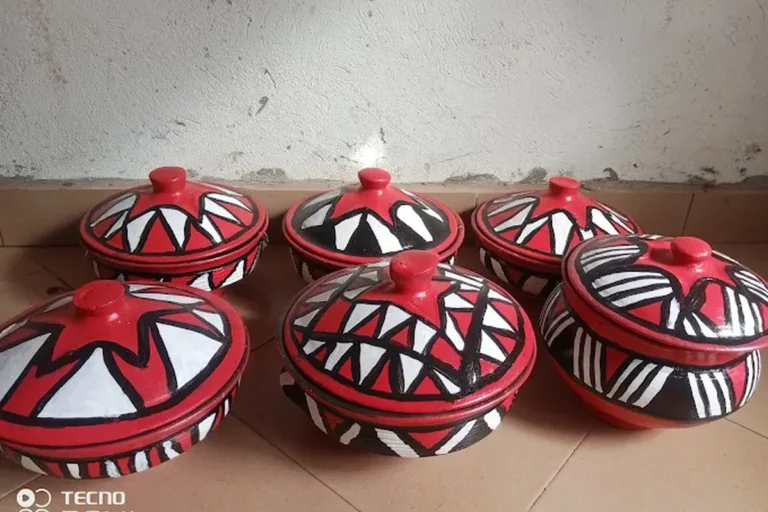
| Sirigu | Art & pottery village of painted houses |
| Bolgatanga | Craft hub — baskets, leather, the market |
| Tongo Hills & Tengzug Shrine | Dramatic granite hills & a famous shrine |
| Pikworo Slave Camp | Moving 19th-century slave-transit site at Paga |
| Navrongo Cathedral | A mud-built Catholic cathedral with painted interior |
The crocodiles and the crafts
The region’s signature experience is the Paga Crocodile Pond, where crocodiles are considered sacred and, astonishingly, harmless — guides coax them out with a guinea fowl and you can sit beside one for the photo. Nearby, Sirigu is renowned for its hand-painted houses and pottery, with “be part of the art” workshops where you can try the wall designs and basketry yourself. And Bolgatanga is the craft capital, the source of the woven straw baskets sold across Ghana and beyond.
Shrines, hills and history
The granite Tongo Hills shelter the important Tengzug Shrine, a powerful spiritual site reached on a guided walk through balancing boulders and traditional Talensi homesteads. At Paga, the sobering Pikworo Slave Camp preserves a 19th-century slave-transit site — eating bowls carved into rock, a punishment area, a lookout — a quieter northern counterpart to the coastal castles. And the mud-built Navrongo Cathedral is a beautiful surprise.
When to go
Visit in the dry season (November to April); the harmattan months bring cooler, dusty days. The far north gets very hot before the rains, and the rainy season can make some rural roads tricky. See our best time to visit guide.
Getting there and around
The Upper East is Ghana’s far northeast — most travellers fly to Tamale (the nearest airport) and continue by road to Bolgatanga (around 2.5–3 hours), or combine it with a Mole/northern trip. Within the region, a hired car or local guide is the easiest way to link Paga, Sirigu and the Tongo Hills. It’s a region best given its own time rather than rushed.
Where to stay
Bolgatanga and Navrongo have simple, comfortable hotels and guesthouses that make a fine base for exploring Paga, Sirigu and the hills. Community-run and eco options around Sirigu offer a more immersive, local stay. Keep expectations modest and the welcome warm.
Explore the Upper East’s attractions
Tap any place for the full details, map and visitor tips.
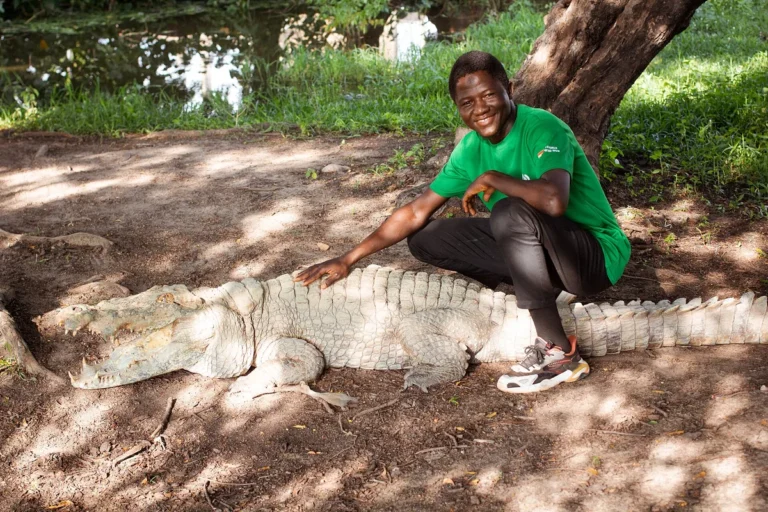
Paga Crocodile Pond
Sacred crocs — sit on them. GHS 20 tip to handler. Nothing like it in West Africa.
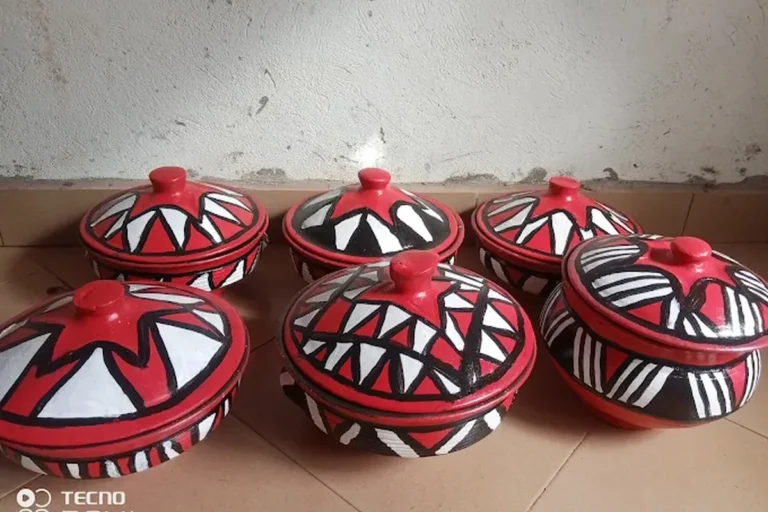
Sirigu Women’s Art Village
Hand-painted mud houses — geometric patterns. Women's pottery co-op ships internationally.
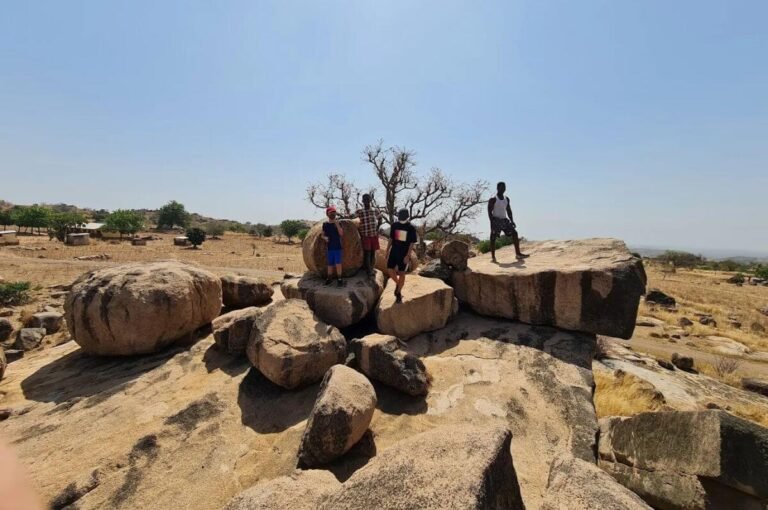
Tongo Hills & Tengzug Shrine
Dramatic balancing granite boulders and a powerful traditional shrine, explored on a guided walk near Bolgatanga.
The bottom line
The Upper East is Ghana’s cultural deep end — sit beside the sacred crocodiles of Paga, learn wall-painting at Sirigu, buy baskets at the source in Bolgatanga, and walk to the Tengzug shrine in the Tongo Hills. It takes effort to reach, usually via Tamale, but rewards you with some of the most authentic experiences in the country. Pair it with a northern safari trip using our itinerary and things to do guides.