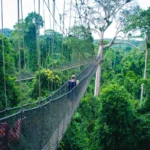
If you’ve come to Ghana to see elephants, this is the region you’re really after. Created in 2019 from the old Northern Region, the Savannah Region is Ghana’s largest by area and its undisputed safari country — home to Mole National Park, the ancient mud mosque at Larabanga, and the wide, golden bush of the deep north. It’s where you swap castles and cities for walking safaris, waterholes and Sahelian heritage. Here’s what to see across the Savannah Region, when to go, and how to reach it.
The vibe
Big sky, big bush, slow days. The Savannah Region is exactly what its name promises — vast grasslands and scattered woodland, sparsely populated, with the rhythms of farming villages and a deep Islamic and traditional heritage. The capital is Damongo, the gateway town to Mole. This is the most “African safari” Ghana gets, and far cheaper and less crowded than East Africa.
Top things to do in the Savannah Region
| Sight | What it is |
|---|---|
| Mole National Park | Ghana’s largest reserve — walking safaris, elephants |
| Larabanga Mosque | Ancient Sudanese-style mud-and-stick mosque |
| Larabanga Mystic Stone | A legendary stone with its own folklore |
| Mognori Eco-Village | Canoe safari & community homestays near Mole |
| Salaga | Sobering former slave-market town |
Mole National Park
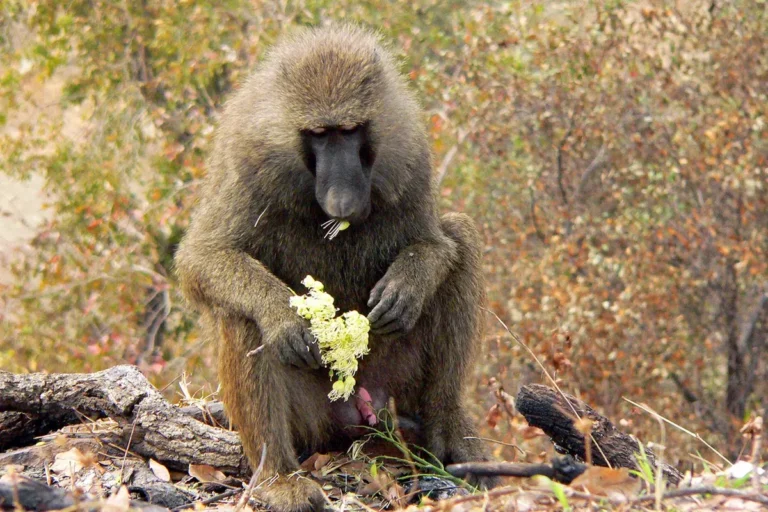
Mole is the reason most people come north. Ghana’s largest wildlife reserve covers some 4,840 sq km of savannah and is famous for its walking safaris — you set off on foot with an armed ranger and close in on elephants at the waterhole, with antelope, warthogs, baboons and hundreds of bird species along the way. The lodges on the escarpment look straight down onto the animals. It’s the closest thing Ghana has to a classic safari. See our national parks guide for the detail.
Larabanga and the heritage
On Mole’s doorstep, the village of Larabanga holds one of the oldest mosques in West Africa — a striking Sudanese-style structure of mud and timber that looks unchanged for centuries — plus the legendary “Mystic Stone.” Nearby Mognori Eco-Village offers gentle canoe safaris and community homestays, and the historic town of Salaga bears the sombre legacy of a major inland slave market. Together they give the region a cultural depth beyond the wildlife.
When to go
Come in the dry season, especially December to April — the bush thins out and animals gather at the shrinking waterholes, making Mole’s wildlife far easier to see. The harmattan brings cooler nights and dusty days. Avoid the peak of the rains, when the landscape is lush but sightings are harder and some roads slow. See our best time to visit guide.
Getting there and around
The smart route is to fly to Tamale from Accra (about an hour, versus a 10–12 hour drive), then transfer by road to Mole (around 3–4 hours via Damongo and Larabanga). Within the park you explore on guided walking or driving safaris — you cannot wander outside the lodge grounds without an armed ranger. A hired vehicle or organised tour makes the whole trip far smoother.
Where to stay
The lodges inside Mole, perched on the escarpment overlooking the waterholes, are the place to stay — you can watch elephants from the pool. Options are limited and book out in the dry season, so reserve well ahead. Mognori’s community homestays offer a more immersive, local alternative nearby.
Explore the Savannah Region’s attractions
Tap any place for the full details, map and visitor tips.
Listings coming soon.
The bottom line
The Savannah Region is Ghana’s safari country — come for Mole’s walking safari and elephants, stay on the escarpment, and round it out with the ancient Larabanga mosque and a Mognori canoe trip. Fly to Tamale to save a day, visit in the dry season for the wildlife, and give it two nights as part of a 10-to-14-day trip. Plan it with our itinerary and national parks guides.