Go to a Ghanaian funeral, a graduation, a naming ceremony or even a bank, and you’ll start to notice them — spare, geometric symbols stamped on cloth, carved into stools, worked into logos and printed on the very banknotes. These are adinkra, a centuries-old visual language of the Akan people in which a single symbol can carry an entire proverb, a moral, or a truth about life and death. This guide explains what adinkra symbols are, where they came from and how they’re made — and then gives you a complete, illustrated reference to 121 of them, with their names and symbolic meanings.
What are Adinkra symbols?
Adinkra are visual symbols that represent concepts, proverbs and aphorisms. They come from the Akan peoples of Ghana and neighbouring Côte d’Ivoire — the Asante above all — and date to the 18th century or earlier. Each one distils a big idea into a small, repeatable image: faith, leadership, resilience, unity, humility, love. Because a single stamp can communicate a whole philosophy, adinkra function as a kind of written wisdom, and many are tied directly to well-known Akan proverbs. For a deeper guide to individual symbols and meanings, explore Adinkra Art.
The origin story
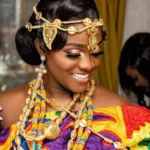
The word adinkra means “farewell” or “goodbye” in Twi — which is why the cloth was traditionally worn at funerals, to bid farewell to the departed. Tradition links the symbols to Nana Kofi Adinkra, a king of the Gyaman people, whose patterned cloth was adopted by the Asante after his defeat in the early 1800s. From those royal and mourning origins, adinkra spread through Asante culture and then far beyond it, becoming one of the most recognisable expressions of African identity in the world.
How adinkra cloth is made
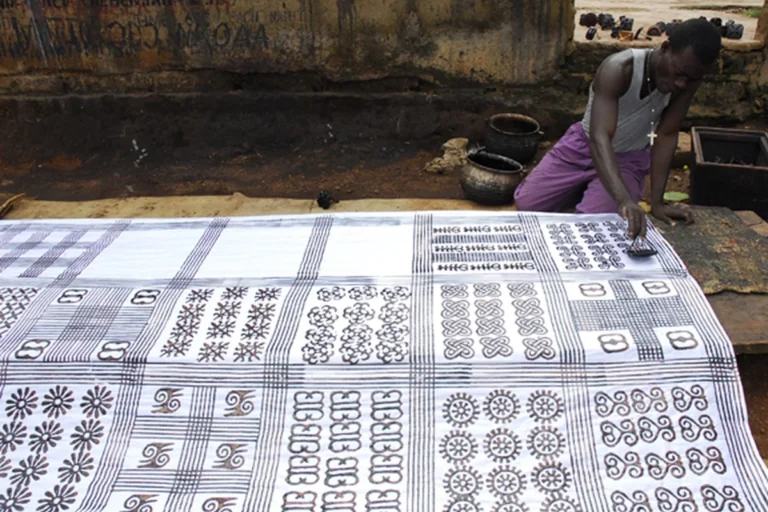
Authentic adinkra is hand-stamped. Artisans carve each symbol into a piece of calabash gourd to make a stamp, then dip it in adinkra aduru — a thick black dye boiled down from the bark and roots of the badie tree — and press it onto cotton cloth divided into a grid. The spiritual home of the craft is Ntonso, a village near Kumasi in the Asante heartland, where you can watch the cloth being made and even carve a stamp and print your own piece. It’s one of the most hands-on cultural experiences in Ghana — see our Kumasi guide.
Why they still matter
Adinkra never stayed in the past. Today they appear on logos, jewellery, tattoos, architecture and fashion around the world, and carry special meaning for the African diaspora reconnecting with their heritage. In Ghana their prestige is everywhere: Gye Nyame sits on the 200-cedi banknote, and adinkra feature in the coats of arms of several Ghanaian universities. They remain a living language — a way to say something profound without a single word. They sit alongside kente cloth as the twin pillars of Asante visual culture.
The most important symbols to know
If you learn just a handful, make it these — the ones you’ll see most often and that carry the deepest resonance:
| Symbol | Means | Why it matters |
|---|---|---|
| Gye Nyame | “Except God” / supremacy of God | The most popular symbol in Ghana; on the 200-cedi note |
| Sankofa | “Go back and get it” | Learning from the past; the diaspora’s beloved symbol |
| Dwennimmen | Ram’s horns | Strength balanced with humility |
| Adinkrahene | Chief of the adinkra | Leadership, authority and charisma |
| Akoma | The heart | Patience, tolerance and love |
| Funtunfunefu Denkyemfunefu | Siamese crocodiles | Unity in diversity — share the food, the stomach is one |
| Nyansapo | Wisdom knot | Wisdom, ingenuity and intelligence |
| Fawohodie | Independence | Freedom and self-determination |
Where to see and buy adinkra in Ghana
For the real thing, head to Ntonso near Kumasi to watch (and make) hand-stamped cloth, or browse the workshops and craft villages around the city — see our Kumasi guide. In Accra, the Arts Centre and the markets are full of adinkra cloth, stamps, carvings and jewellery (haggle, and buy from makers where you can — our shopping guide has tips). Understanding the symbols first, as you can below, makes every piece far more meaningful. For the wider context, read our Ghanaian culture guide.
121 Adinkra symbols and their meanings
Here is the complete illustrated reference. Each row shows the symbol, its name, and the concept or proverb it represents — its full symbolic meaning. Use it to decode the adinkra you’ll see on cloth, walls and crafts all over Ghana.
| Symbol | Name | Meaning |
|---|---|---|
 |
Aban | Fortress (or castle). A symbol of strength, seat of power, authority, and magnificence. |
 |
Aban (variant 2) | Fortress (or castle). A symbol of strength, seat of power, authority, and magnificence. |
 |
Abusua Pa | Good family. A symbol of family unity, kinship ties, and family support. From the expression, “Abusua pa mu na adoye ne koroye wo,” to wit, “It is in a good family that we have love and unity.” |
 |
Adinkrahene | King of the Adinkra symbols. A symbol for authority, leadership, and charisma. Also a symbol for qualities associated with kings. Adinkrahene is reportedly the inspiration for the design of the other symbols. |
 |
Adobe Santann | The all-seeing eye. A symbol of the watchful, ever-present eye of God — a reminder of divine providence, vigilance and protection. |
 |
Adwo | Calmness. A symbol for peace, tranquility, and quiet. |
 |
Agyin Dawuru | Agyin’s gong. A symbol of faithfulness, alertness, and dutifulness. Designed to commemorate the faithfulness of one Agyin who was a dutiful servant and gong-beater of the Asantehene. |
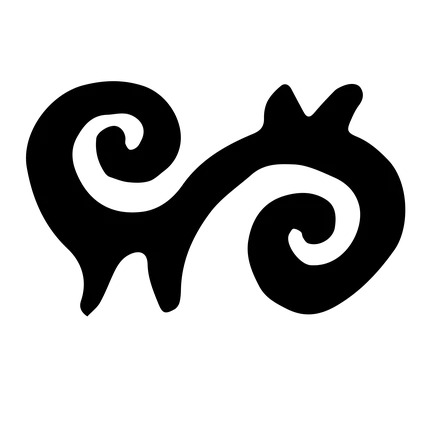 |
Ahoden | “Strength, vitality” – Symbol of strength, resilience, and energy. Read the full Ahoden guide . Categorized in: Adinkra Symbols Share Article: Share on Facebook Share on Twitter Share on Email Share on WhatsApp Like what you read? Subscribe to our Newsletter Submit Subscribe to our email newsletter to get the latest posts delivered right to your email. |
 |
Akoben | War horn. A symbol of a call to action, readiness to be called to action, readiness, and voluntarism. |
 |
Akoben (variant 2) | War horn. A symbol of a call to action, readiness to be called to action, readiness, and voluntarism. |
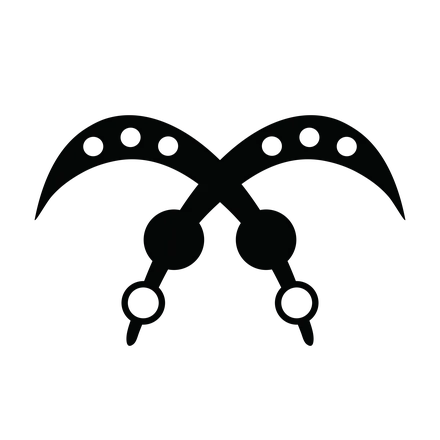 |
Akofena | A sword of war (or the state ceremonial swords). A symbol of state authority, legality, the legitimized authority of a ruler, recognition of gallantry of heroic deeds. Ghana’s coat of arms shows one of these ceremonial swords crossed with a linguist’s staff in its top left quadrant. |
 |
Akoko Nan | The foot of a hen. A symbol for discipline coupled with care and nurturing; from the Akan proverb, “Akoko nan tia ba na enkum ba,” literally, “The foot of a hen steps on the child (chick) but it doesn’t kill the child (chick).” |
 |
Akoma | Ntoaso Joining of hearts. A symbol of agreement, togetherness and unity or a charter. An amplification of the concept of Akoma |
 |
Akoma Ntoso | Linked hearts. A symbol of understanding, agreement and unity — hearts joined together in harmony and mutual goodwill. |
 |
Akwaaba | “Welcome” – Symbol of Reception, Hospitality. This symbol represents warmth, openness, and the spirit of hospitality. It embodies the value of making others feel accepted and valued, promoting a culture of kindness, inclusivity, and genuine connection. Read the full Akwaaba guide . |
 |
Ananse Ntontan | “Spider’s web” – Symbol of Wisdom, Creativity and the complexities of life. This symbol represents intelligence, resourcefulness, and the power of creativity. Inspired by Ananse the Spider, a legendary figure in African folklore, it emphasizes strategic thinking, innovation, and the ability to adapt and overcome challenges. Read the full Ananse Ntontan guide . |
 |
Ani Bere a Enso | Gya No matter how red-eyed one becomes (i.e. how serious one becomes), his eyes do not spark flames. A symbol of patience, self-containment, self-discipline, and self-control. |
 |
Anyi me Aye a | If you will not praise me. A symbol of ingratitude, ungratefulness, and boorishness. From the expression, “Anyi me aye a, nsee me din,” to wit, “If you will not praise me, don’t spoil my name (that is, undermine my integrity).” |
 |
Asaawa | Sweet berry or miracle berry. A symbol of sweetness, sweet taste, pleasure, and hedonism. From the proverb, “Asaawa se: Ode nka anomu,” to wit, “Sweetness does not stay in the mouth forever.” |
 |
Asase Ye Duru | The earth has weight. A symbol of providence and the divinity of Mother Earth. |
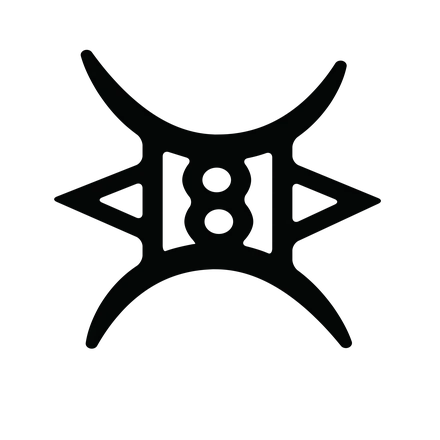 |
Asetena Pa | Good living. A symbol of conspicuous spending, indulgence, wealth, and upper social class. From the saying “Asetena pa ye awerefire,” to wit, “Good living is forgetfulness (that is, good living makes one forget his humble beginnings)” |
 |
Awurade | A name for God (“Lord”). A symbol of God’s supremacy and providence, and of the divine presence watching over all things. |
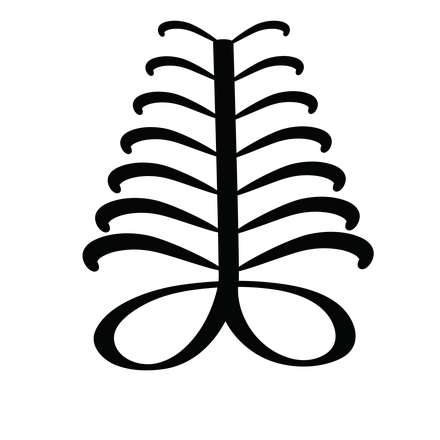 |
Aya | The fern. A symbol of endurance, resourcefulness and defiance — the fern thrives in hard places, so to wear it is to say, “I have endured difficulties and I am not afraid of you.” |
 |
Bese Saka | Bunch of cola nuts. A symbol of affluence, power, abundance, and plenty. Also a symbol of togetherness and unity |
 |
Bi Nka Bi | Let no one bite the other. A symbol of justice, fairplay, freedom, peace, forgiveness, unity, harmony, and the avoidance of conflict or strife. |
 |
Boa me na me Mmoa wo | Help me and let me help you. A symbol of cooperation and interdependence. From the aphorism, “Boa me na me mmoa wo,” to wit “Help me and let me help you” or, “Benkum dware nifa na nifa nso adware benkum,” to wit, “The left (hand) washes the right and the right washes the left.” |
 |
Boafo Ye na | The rarity of a willing helper. It is a symbol of support, patronage, cooperation, and teamwork. “Boafo ye na,” the popular Akan expression associated with this symbol, literally means “Helpers are rare” or “Helpful people are rare.” |
 |
Dame Dame | Checkered. A symbol of craftiness, intelligence, and strategy. |
 |
Denkyem | Crocodile. A symbol of adaptability and cleverness. |
 |
Donno | “Bell drum” – This symbol represents the power of communication, rhythm, and storytelling. It signifies the importance of effective expression, cultural heritage, and the role of sound in conveying messages and emotions. Read the full Donno guide . |
 |
Donno Ntoaso | “Talking drum” – The talking drum is a communication device among many cultures in Africa. This symbol represents resilience, motivation, and the continuation of traditions. It signifies the importance of perseverance, rhythmic balance in life, and passing down knowledge through generations. Read the full Donno Ntoaso guide . |
 |
Duafe | Wooden comb. A symbol of feminine consideration or good feminine qualities such as patience, prudence, fondness, love, and care. |
 |
Dwennimmen | Ram’s horns. A symbol of strength (in mind, body, and soul), humility, wisdom, and learning. This symbol features prominently in the logo of the University of Ghana, Ghana’s first and largest university. |
 |
Eban | Fence. A symbol of safety, security, and love. |
 |
Epa | Handcuffs. A symbol of law and justice. |
 |
Ese ne Tekrema | Teeth and tongue. A symbol of improvement, advancement, growth, the need for friendliness and interdependence. |
 |
Esono Anantam | Elephant’s footprint. A symbol of leadership, protection, power, and security. From the aphorism, “Wodi esono akyi a, hasuo nka wo,” to wit, “When you follow the elephant, you don’t you are not touched by (you don’t get wet from) the dew on bushes.” |
 |
Fafanto | Butterfly. A symbol of tenderness, gentleness, honesty, and fragility. |
 |
Fawohodie | Freedom or independence. A symbol of freedom, independence, emancipation, self-determination, and self-government. From the proverb, “Fawohodie ne obre na enam,” literally, “Freedom walks with suffering,” that is, “Freedom or independence comes with responsibilities.” |
 |
Fihankra | The walled compound house. A symbol of security, solidarity and brotherhood, and of the safety of home, family and community. |
 |
Fofo | A flowering plant (bidens pilosa). A symbol of warning against jealousy and covetousness. |
 |
Funtunfunefu Denkyemfunefu | Conjoined crocodiles sharing one stomach. A symbol of unity in diversity and of democracy — though they share a stomach they still struggle over food, a warning that infighting harms the whole. |
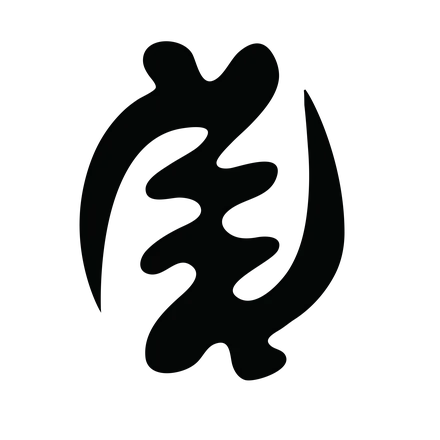 |
Gye Nyame | Except God. A symbol expressing the omnipotence and supremacy of God. It is arguably the most popular Adinkra symbol in Ghana, reflecting the deep spirituality of its people. Gye Nyame is featured on Ghana’s largest-denomination banknote, the 200 cedi note, as well as on the crests of the University of Cape Coast and the Catholic University College. |
 |
Gye Wani | Enjoy yourself. A symbol of the importance of fun, relaxation and taking genuine pleasure in life. |
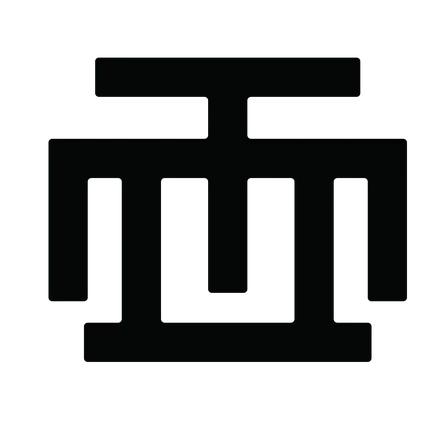 |
Hwe mu Dua | “Measuring stick” – Symbol of Examination and Quality Control. This symbol stresses the need to strive for the best quality, whether in a production of goods or in human endeavors. Read the full Hwe Mu Dua guide . |
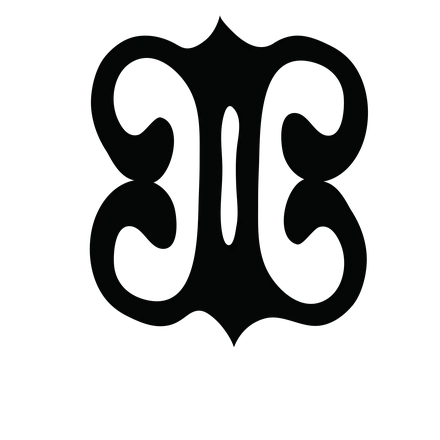 |
Hye Won Hye | “That which does not burn” – Symbol of Imperishability and Endurance. This symbol gets its meaning from traditional priests that were able to walk on fire without burning their feet, an inspiration to others to endure and overcome difficulties. Read the full Hye Won Hye guide . |
 |
Kete Pa | Good bed. A symbol of good marraige, successful marriage, and good care. From the expression, “Obaa ko aware pa a na yede no to kete pa so,” to wit, “It is when a woman enters a good marriage that she is put on a good bed.” |
 |
Kintinkantan | “Puffed-up extravagance” – Symbol of Arrogance. This symbol warns against pride, arrogance, and self-importance, encouraging humility, modesty, and respect for others as the path to true greatness. Read the full Kintinkantan guide . |
 |
Kokuromotie | Thumb. A symbol of cooperation, participation, teamwork, indispensability, and harmony. From the proverb, “Yensiane kokuromotie ho mmo po,” to wit, “We don’t bypass the thumb to tie a knot.” Anybody who tries the exercise of tying a knot without his thumbs quickly appreciates this proverb. |
 |
Kramo Bone | Amma Yeanhu Kramo Pa The bad muslim makes it difficult for a good one to be recognized. A symbol of warning against deception and hypocrisy. |
 |
Kuntun Kantan | Named for the Kurontire and Akwamu, the two complementary councils of an Asante state. A symbol of democracy, statesmanship and the sharing of power. |
 |
Kuronti ne Akwamu | Kuronti and Akwamu. A symbol of democracy, sharing ideas, taking council. |
 |
Kwatakye Atiko | The back of Kwatakye’s head. A symbol of valor and bravery. This symbol is also called Gyawu Atiko. It is said to be a hairstyle of Kwatakye, a war captain of old Asante. |
 |
Kyemfere | Potsherd. A symbol of knowledge, experience, service, keepsake, antiquity, rarity, and heirloom. From the proverb, “Kyemfere se odaa ho akye, na onipa a onwenee no nso nye den?” to wit, “The potsherd claims it is old; what about the potter who molded it?” |
 |
Mako Nyinaa | From “Mako nyinaa mpɛ abɛre pɛ” — all peppers do not ripen at the same time. A symbol of patience, and of inequality and the uneven pace of life. |
 |
Mate Masie | I have heard and kept it. A symbol of wisdom, knowledge, and prudence. From the saying, “Nyansa bon mu ne mate masie,” to wit, “The hole of wisdom is ‘I have heard and kept it'” |
 |
Me Ware wo | “I shall marry you” – Symbol of Commitment, Perseverance. From the expression: “No one rushes into the job of mixing the concrete for building the house of marriage.” Read the full Me Ware Wo guide . |
 |
Mekyia wo | “I salute you” – Symbol of Respect. This symbol represents respect, acknowledgment, and the importance of recognizing others. It emphasizes the cultural value of greetings and the act of showing respect and care to those around you. Read the full Mekyia Wo guide . |
 |
Mframadan | Well-ventilated house. A symbol of resilience and readiness to face the vicissitudes of life. |
 |
Mmara Krado | “Seal of law” – Symbol of Justice. This symbol represents the importance of justice, fairness, and adherence to law. It signifies discipline, moral integrity, and the idea that the path to righteousness is guided by laws and principles. Read the full Mmara Krado guide . |
 |
Mmere Dane | Time chanegs (times change). A symbol of the temporariness of good times. |
 |
Mmusuyidee | That which removes bad luck or evil. A symbol of good fortune, spiritual cleansing and sanctity, and of the power to dispel misfortune. |
 |
Mo no Yo | “Congratulations” – Symbol of Recognition. This symbol represents acknowledgment, honor, and celebration of achievement. Read the full Mo No Yo guide . |
 |
Mpatapo | Pacification knot. A symbol of pacification, forgiveness, and reconciliation. |
 |
Mpuankron | “Nine tufts of hair” – This symbol represents participatory democracy and disapproval of dictatorship, highlighting the importance of shared power and collective decision-making. Read the full Mpuankron guide . |
 |
Mpuannum | Five tufts (of hair). A symbol of loyalty and priestly office |
 |
Mrammuo | “Crossing paths” – This symbol represents the interconnection of lives and the unexpected encounters that shape our journey. It signifies the idea that every meeting and crossing of paths has a purpose. Read the full Mrammuo guide . |
 |
Nante Yie | “Goodbye / Walk well” – Symbol of Farewell. This symbol represents parting ways with the expectation of a new chapter, encouraging resilience and optimism. Read the full Nante Yie guide . |
 |
Nea Onnim no Suaa Ohu | He who does not know can come to know through learning. A symbol of knowledge, lifelong learning and the patient pursuit of wisdom. |
 |
Nea Ope se Obedi Hene | He who wants to be a king. A symbol of the qualities of a leader, service, and leadership skills. From the expression, “Nea ope se obedi hene daakye no firi asee sua som ansa,” to wit, “He who wants to be a king in the future begins by learning how to serve.” |
 |
Nkonsonkonson | Chain. A symbol of unity, community. |
 |
Nkotimsefo Mpua | The hairstyle of court attendants. A symbol of loyalty and a readiness to serve |
 |
Nkrabea | Destiny. A symbol of destiny, determinism, unequal distribution of talents, and inequality. From the aphorism, “Esono onipa biara ne ne nkrabea,” or, “Onyame nkrabea mu nni kwatibea” which translate literally to “Everybody has their own distinct destiny” and “God’s destiny cannot be circumvented” respectively |
 |
Nkuruma Kesee | “Big okra” – This symbol represents fertility, sustenance, and the promise of a bountiful harvest. Read the full Nkuruma Kesee guide . |
 |
Nkyimu | “Crossed divisions on Adinkra cloth” – Symbol of Skillfulness, Precision. Before the Adinkra cloth is stamped with the symbols, the artisan blocks off the cloth with lines in a rectangular grid using a broad-tooth comb. This preparation is symbolic of the exacting technique which results in the highest quality product. Read the full Nkyimu guide . |
 |
Nkyinkyim | Twisting. A symbol of initiative, dynamism, adaptability and resilience — life’s path is full of twists and turns that demand a versatile, devoted spirit. |
 |
Nnampo Pa Baanu | “Two good friends” – A symbol of friendship and interdependence, highlighting unity and mutual reliance. Read the full Nnampo Pa Baanu guide . |
 |
Nokore | “Truth” – Symbol of Truth. This symbol represents integrity, honesty, and authenticity. Read the full Nokore guide . |
 |
Nsa Ko na Nsa | Hand goes and hand comes. A symbol of reciprocity, mutual cooperation and fairness — give-and-take in human relationships. |
 |
Nsaa | A type of woven cloth, renowned for its quality. A symbol of excellence, genuineness, and authenticity. |
 |
Nserewa | Cowries. A symbol of affluence and wealth. Also a symbol of sacredness when used by priests. Cowries were traditionally used as money in parts of West Africa before the colonial era. In fact, the anglicized form of the Twi word for ‘cowry’–‘sedee’–is what was adopted as the name for the national currency when the nation weaned itself off of the Ghanaian pound after independence. |
 |
Nsoromma | Star (literally, “child of the heavens”). A symbol of faith and the belief in patronage and dependency on a supreme being |
 |
Nya Gyidie | “Have faith” – Symbol of Faith and Hope. Read the full Nya Gyidie guide . |
 |
Nyame Biribi wo Soro | God, there is something in the heavens. From the saying, “God, there is something up there (in the heavens); let it come to me.” A symbol of hope and inspiration. |
 |
Nyame Dua | God’s tree (sacred stump). A symbol of God’s presence and protection. |
 |
Nyame Nnwu na Mawu | “God never dies, therefore I cannot die” – Symbol of God’s omnipresence and the perpetual existence of man’s spirit. This signifies the immortality of the human soul, believed to be part of God. Because the soul rests with God after death, it cannot die. Read the full Nyame Nnwu Na Mawu guide . |
 |
Nyame Nti | By God’s grace. More literally, “Because of God.” A symbol of faith and trust in God. The proverb associated with this symbol is, “Nyame nti, menwe wura,” to wit, “Because of God (by God’s grace), I won’t feed on leaves (like an animal).” |
 |
Nyame Ye Ohene | “God is King” – Symbol of Majesty and Supremacy of God. This symbol represents divine authority, sovereignty, and ultimate power. It signifies faith in God’s guidance, protection, and rule over all things, reinforcing the belief that spiritual strength prevails over worldly challenges. Read the full Nyame Ye Ohene guide . |
 |
Nyansapo | Wisdom knot. A symbol of wisdom, ingenuity, intelligence, and patience. The proverb associated with this Adinkra is “Nyansapo wosane no badwenma,” to wit, “A wisdom knot is untied (only) by the wise.” The Kwame Nkrumah University of Science and Technology (KNUST) uses Nyansapo in their logo and uses the associated proverb as their motto. |
 |
Obaatan Awaamu | “Warm embrace of mother” – Symbol of Compassion and Motherly Love. Read the full Obaatan Awaamu guide . |
 |
Obohemmaa | “Diamond” – Symbol of preciousness, resilience, and rare beauty. Read the full Obohemmaa guide . |
 |
Odo Nnyew Fie Kwan | (Odo Nyera Fie Kwan) Love does not lose its way home. Those led by love always end up in the right place. |
 |
Ohene Adwa | “King’s stool” – Symbol of Authority and Leadership. Read the full Ohene Adwa guide . |
 |
Ohene Aniwa | The king’s eyes. A symbol of vigilance, far-sightedness, intelligence, protection, security, defence, authority, and power. From the aphorism, “Ohene aniwa twa ne ho hyia,” to wit, “The kings eyes surround him,” that is, “The king sees everything.” |
 |
Ohene Kra | Konmunde “Royal soul pendant” – Symbol of the royal soul and divine authority. Read the full Ohene Kra Konmunde guide . |
 |
Ohene Kye | “King’s crown” – Symbol of leadership and responsibility. Read the full Ohene Kye guide . |
 |
Ohene Kyiniie | “King’s umbrella” – Symbol of leadership and protection. Read the full Ohene Kyiniie guide . |
 |
Ohene Papa | “Good king” – Symbol of good governance, justice, and wise leadership. Read the full Ohene Papa guide . |
 |
Okodee Mmowere | The talons of an eagle. A symbol of strength, bravery, and power. These attributes are derived from the character and traits of the eagle. |
 |
Onyankopon Adom Nti Biribiara Beye Yie | “By God’s grace, all will be well” – Symbol of Hope, Providence, Faith. This symbol reflects faith in divine providence and the belief that with God’s favor, everything will fall into place. It serves as a reminder to trust in a higher power, remain hopeful, and persevere through life’s challenges. Read the full Onyankopon Adom Nti Biribiara Beye Yie guide . |
 |
Osiadan Nyame | “God the builder” – Symbol of God as creator and protector. Read the full Osiadan Nyame guide . |
 |
Osram ne Nsoromma | Moon and star. A symbol of faithfulness, fondness, harmony, benevolence, love, loyalty, and femininity. |
 |
Otumfuo Wuo Ye | Ya “The king is gone” – Symbol of the pain of a king’s death and the weight of his legacy. Read the full Otumfuo Wuo Ye Ya guide . |
 |
Owiaa Repue | The rising sun. A symbol of progress, renewal, hope and the energy and promise of a new day. |
 |
Owo Foro Adobe | A snake climbs a raffia palm. A symbol of ingenuity, excellence, feat performance, and performing the unusual or impossible |
 |
Owuo Atwedee | Ladder of death. A symbol of the certainty and universality of death. |
 |
Pagya | “Strikes fire” – Symbol of transformation and strength, the spark that ignites change. Read the full Pagya guide . |
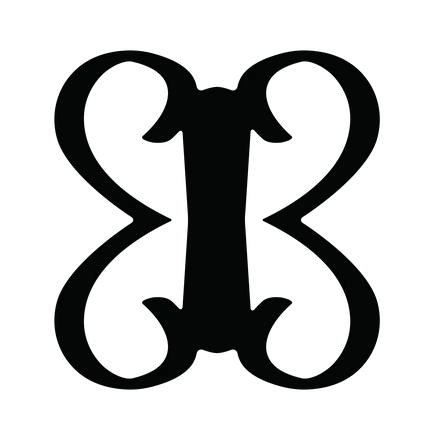 |
Pempamsie | Sew in readiness. A symbol of foresight, readiness, steadfastness, hardiness, valor, and fearlessness. |
 |
Sankofa | Go back and get it! A symbol for the wisdom of learning from the past to build for the future. From the Akan proverb, “Se wo were firi na wosan kofa a, yenkyiri,” meaning, “It is not taboo to go back for what you forgot (or left behind).” While Gye Nyame may be the most popular Adinkra symbol in Ghana, Sankofa is the most popular one beyond the shores of Ghana, serving as a symbol of deep spiritual significance for m… |
 |
Sankofa (variant 2) | Go back and get it! A symbol for the wisdom of learning from the past to build for the future. From the Akan proverb, “Se wo were firi na wosan kofa a, yenkyiri,” meaning, “It is not taboo to go back for what you forgot (or left behind).” While Gye Nyame may be the most popular Adinkra symbol in Ghana, Sankofa is the most popular one beyond the shores of Ghana, serving as a symbol of deep spiritual significance for m… |
 |
Sepo | The executioner’s knife. A symbol of justice, the authority of the state, and the gravity of its power over life and death. |
 |
Sesa wo Suban | Change your character. A symbol of warning against arrogance, bad manners, and dishonorable behavior. |
 |
Som Onyankopon | Worship God. A symbol of devotion and worship. From the expression, “Som Onyankopon” which literally means, “Worship God.” |
 |
Sunsum | (Ntoro) Soul. A symbol of spiritual purity and cleanliness of the soul. The Akans believe that this is the part of God the creator that is transmitted to a person through his father. A person’s mother cannot transmit sunsum to him. Instead, she transfers her mogya (blood) to him |
 |
Tabono | Paddle or oar. A symbol of strength, confidence, and persistence. These attributes are derived from the qualities required of one who paddles a boat. |
 |
Tamfo Bebre | The enemy will suffer; the enemy will stew in his own juice. A symbol for ill-will, jealousy, and envy. |
 |
Ti Koro Nko | Agyina “One head is not a council” – Emphasizing the importance of cooperation and teamwork. Read the full Ti Koro Nko Agyina guide . |
 |
Wawa Aba | Seed of the wawa tree. A symbol of hardiness, toughness, and perseverance. |
 |
Wo Nsa Da mu a | When your hands are inside (the dish). A symbol of participatory government, democracy, and pluralism. From the aphorism, “Wo nsa da mu a, wonni nnya wo,” to wit, “When your hands are inside the dish, people don’t eat everything and leave you nothing.” |
 |
Woforo Dua Paa | From “Woforo dua pa a, na yepia wo” — when you climb a good tree, you are given a push. A symbol of support and encouragement for worthy causes, and of cooperation. |
 |
Yebehyia Bio | “We will meet again” – Symbol of reunion and hope. Read the full Yebehyia Bio guide . |
The bottom line
Adinkra are far more than decoration — they’re a written language of Akan wisdom, each symbol a proverb you can wear, carve or hang on a wall. Learn the big ones (Gye Nyame, Sankofa, Dwennimmen, Adinkrahene) and you’ll start reading Ghana everywhere you look; keep this reference handy and you can decode the rest. Better still, go to Ntonso near Kumasi to stamp your own cloth, and bring home a piece that actually means something. It’s one of the most rewarding ways to connect with the country’s living culture.