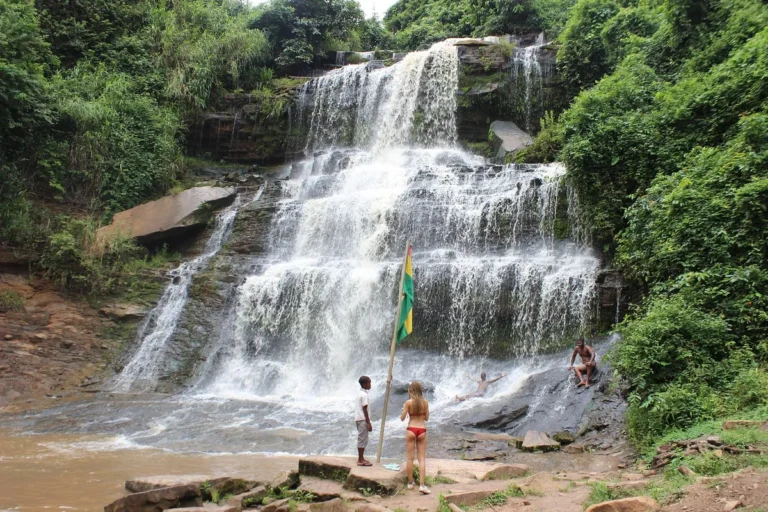
Carved out of the old Brong-Ahafo in 2019, the Bono East Region sits squarely in the middle of Ghana — the transitional belt where southern forest gives way to northern savannah. It’s a region of dramatic waterfalls, one of West Africa’s greatest markets, sacred monkeys and the literal geographic centre of the country. Few tourists stop here, but for road-trippers crossing between the coast and the north, Bono East rewards a pause. Here’s what to see, when to go, and how to get there.
The vibe
Middle-of-the-country crossroads — fertile, busy with trade, and a natural staging post between south and north. The hubs are Techiman, a legendary market town, and Kintampo, gateway to the region’s famous falls. Expect working Ghana rather than polished tourism: big markets, farming country and a handful of genuinely impressive natural sights.
Top things to do in Bono East
| Sight | What it is |
|---|---|
| Kintampo Waterfalls | A spectacular multi-tier ~70m cascade with a canopy walk |
| Techiman Market | One of the largest traditional markets in West Africa |
| Fuller Falls | A quieter, scenic waterfall near Kintampo |
| Centre of Ghana | The country’s geographic midpoint marker near Kintampo |
| Kete-Krachi & Lake Volta | Lakeside town and ferry crossings on the Oti arm |
Waterfalls and the great market
The headline is the Kintampo Waterfalls — a beautiful series of cascades dropping around 70 metres through forest, with steps and a canopy walkway, and a swimming spot at the base. Nearby Fuller Falls offers a quieter alternative. The region’s other giant is Techiman Market, a vast, ancient trading hub that draws sellers from across Ghana and beyond — chaotic, colourful and a real slice of commercial life. Don’t miss the marker for the geographic centre of Ghana near Kintampo, a fun road-trip photo stop.
Nature and the lake
Eastern Bono East reaches the arm of Lake Volta around Kete-Krachi, where ferries cross the water and the pace slows to lakeside calm. The region also borders the wild Digya National Park on the lake. It’s quiet, scenic country for travellers who like the journey as much as the destination.
When to go & getting there
The dry season (November to March) is easiest for the roads and the falls are reliable much of the year (our best time guide). Bono East lies on the main routes between Kumasi and the north: Techiman is about 2 hours from Kumasi, and the region makes a natural break on a long drive toward Tamale and Mole. A hired vehicle is best for reaching the falls.
Where to stay
Techiman and Kintampo have practical mid-range hotels and guesthouses, handy as an overnight stop mid-journey. Lakeside Kete-Krachi has simpler options for those exploring the Volta. This is a region most travellers pass through rather than base in — but the falls justify a stop.
Explore Bono East’s attractions
Tap any place for the full details, map and visitor tips.
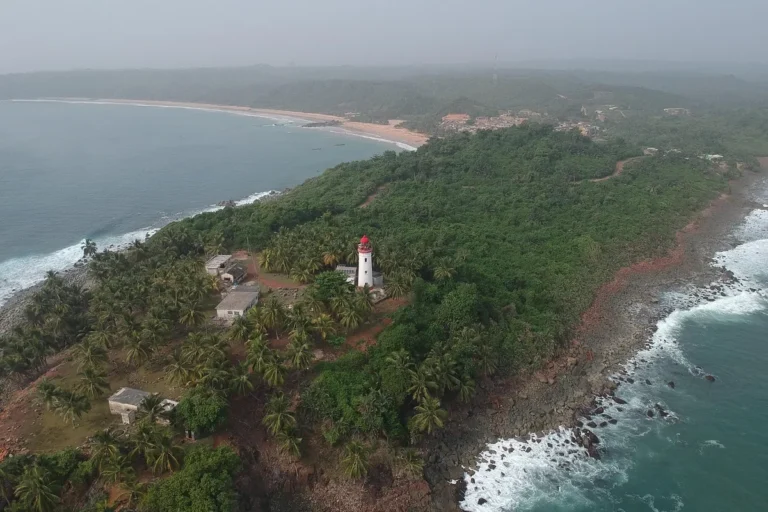
Fuller Falls
A quieter alternative to nearby Kintampo Falls — a scenic multi-tier cascade that's good for a swim.
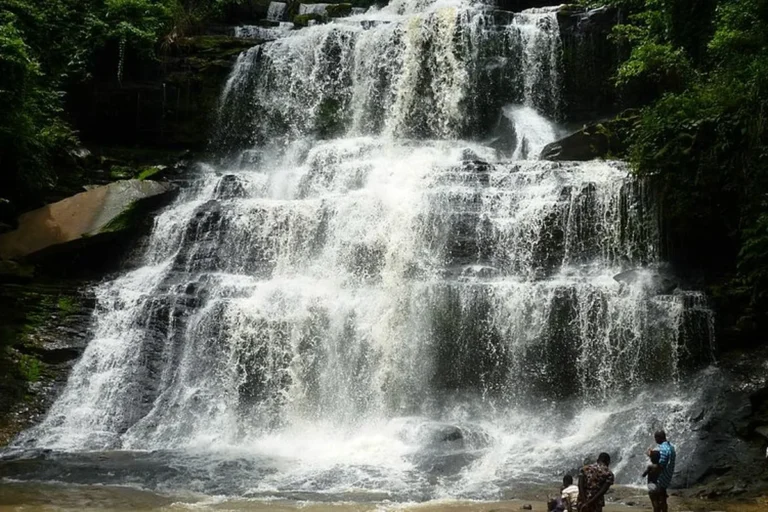
Kintampo Waterfalls
A three-tier waterfall right off the Kumasi–Tamale road — the easiest major falls to reach heading north. Climb the steps to the…
Also worth seeking out
Beyond the falls and the market, seek out the Buoyem Caves and their dramatic colony of Rosetta fruit bats, the Tano Boase Sacred Grove (the cradle of Bono civilisation, with refuge caves and rock formations), and the sobering Bono Manso slave market site, now visited by the diaspora. Time your trip for the Apoo purification festival (March/April) or the Kurubi festival (November), when women dance on stilts.
The bottom line
Bono East is Ghana’s middle ground — pause for the Kintampo Waterfalls, brave the Techiman Market, snap the country’s centre point, and drift to Lake Volta at Kete-Krachi. It’s a road-tripper’s region, perfectly placed to break the long haul between the Ashanti heartland and the northern safari. Plan it into a wider route with our itinerary, waterfalls and things to do guides.