To feel the real pulse of Ghana, skip the mall and dive into a market. These vast, roaring, gloriously chaotic labyrinths are where the country actually lives — where you’ll find everything from yams and smoked fish to kente, beads, electronics and herbal remedies, sold by the legendary “market queens” who run the trade. Visiting one is sensory overload in the best way, and a highlight of any trip. Here’s a guide to Ghana’s greatest markets, what to expect, and how to navigate them.
Ghana’s great markets at a glance
| Market | City | Known for |
|---|---|---|
| Makola Market | Accra | The everything-market, cloth & trade |
| Kejetia (Kumasi Central) | Kumasi | One of the largest in West Africa |
| Kantamanto | Accra | Second-hand clothing (“obroni wawu”) |
| Techiman Market | Bono East | Vast regional produce hub |
| Bolgatanga Market | Upper East | Baskets, leather, northern crafts |
| Kotokuraba Market | Cape Coast | Coastal produce & fish |
The giants: Makola & Kejetia
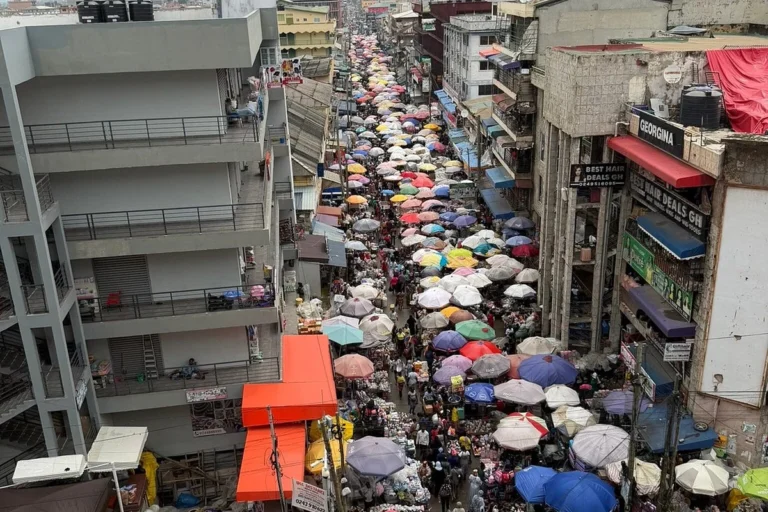
Makola Market in central Accra is the city’s beating commercial heart — a sprawling maze where you can buy literally anything, presided over by powerful market women. In Kumasi, Kejetia (Kumasi Central Market) is even bigger, historically one of the largest markets in West Africa with thousands of stalls; the rebuilt complex is a little easier to navigate but no less overwhelming. Both are unforgettable, must-see experiences (see our Kumasi guide).
Specialist & regional markets
Beyond the giants, each market has a character. Kantamanto in Accra is the world-famous (and controversial) second-hand clothing market, “obroni wawu” — “dead white man’s clothes.” Techiman in the centre is a colossal produce hub drawing traders from across the region, and Bolgatanga in the north is the source of Ghana’s famous straw baskets and leatherwork (see our baskets guide). Coastal Kotokuraba in Cape Coast brims with fish and produce.
What to expect
Expect crowds, noise, narrow lanes, head-carried loads, calls of “obroni!”, and a thrilling sense of organised chaos. Goods are grouped by type — cloth here, produce there, electronics over there. Prices are negotiable at stalls (greet, then bargain with a smile), and it’s all cash or Mobile Money. It can be intense, especially in the heat, but the energy is the whole point.
Tips for visiting markets
- Go in the morning — cooler, fresher and a little less frantic.
- Travel light: a crossbody bag worn in front, only the cash you need, phone secure.
- Bargain at stalls; greet first and keep it friendly (our price guide).
- Ask before photographing people — some traders dislike it.
- Consider a guide for the biggest markets if you want context and ease.
The bottom line
Ghana’s markets — above all Makola in Accra and Kejetia in Kumasi — are where the country’s energy, trade and humanity collide. Go in the morning, travel light, bargain with a smile, and let the wonderful chaos wash over you. It’s free, it’s unforgettable, and it’s the most authentic shopping in the land. Plan more with our shopping guide and Market pillar.