Ghana is a shopper’s dream — not for malls (though it has those) but for the handmade: handwoven kente, stamped adinkra cloth, recycled-glass beads, leather sandals, carved stools and masks, shea butter, and a contemporary art and fashion scene that’s the toast of the continent. The joy is in buying from the makers, at markets and craft villages, with a bit of friendly bargaining. Here’s a guide to shopping in Ghana — what to buy, where to find it, and how to pay a fair price.
What to buy in Ghana
| Buy | Where it’s best |
|---|---|
| Kente cloth | Bonwire & Adanwomase (Ashanti) |
| Adinkra cloth & stamps | Ntonso (Ashanti) |
| Glass beads | Krobo / Odumase (Eastern) |
| Straw baskets | Bolgatanga (Upper East) |
| Shea butter & black soap | The north |
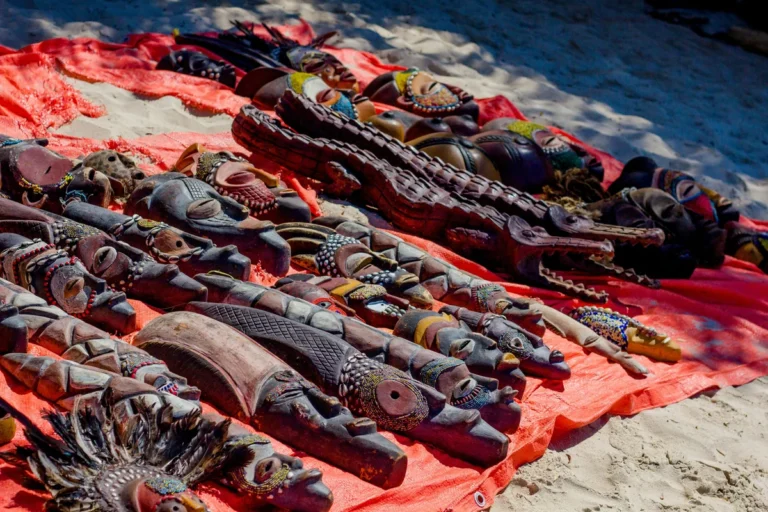
| Carvings, masks, drums | Ahwiaa & the Arts Centre |
| Art & fashion | Accra galleries & designers |
The handmade treasures
Ghana’s signature buys all carry meaning. Kente — the radiant handwoven cloth — and adinkra, stamped with symbolic proverbs, are the headline textiles (see our kente and adinkra guides). Add Krobo glass beads, Bolga baskets, northern shea butter and black soap, Ahwiaa woodcarvings, and leather goods, and you have a shopping list with soul. Buying direct from the craft villages means better prices and far more meaningful souvenirs.
Where to shop
For one-stop variety, the Accra Arts Centre (Centre for National Culture) near Jamestown is the souvenir bazaar — cloth, beads, carvings, drums and more (see our Arts Centre guide). The great markets — Makola in Accra, Kejetia in Kumasi — are an experience in themselves (our markets guide). And for the real thing, go to the source: the craft villages around Kumasi and the Krobo bead workshops. Accra’s art galleries and a booming fashion scene round it out.
The art of bargaining
Haggling is expected at markets, craft stalls and the Arts Centre — and it’s friendly theatre, not conflict. A few rules: greet first, ask the price, counter at roughly half to two-thirds, settle somewhere in between with a smile, and be ready to walk (you’ll often be called back). Fixed-price shops and malls are fixed. Carry small notes and Mobile Money (see our money guide), and check our souvenir price guide so you know roughly what’s fair.
Tips for shopping in Ghana
- Buy from makers where you can — better prices, real provenance, money to artisans.
- Bargain with a smile; never aggressively over tiny sums.
- Carry small cash and MoMo — markets and stalls don’t take cards.
- Know the difference between hand-woven kente and printed “kente print.”
- Leave luggage room — you’ll buy more than you planned.
The bottom line
Shopping in Ghana is about the handmade and the meaningful — kente and adinkra cloth, glass beads, Bolga baskets, shea butter and carvings, ideally bought from the makers with a bit of good-humoured haggling. Hit the Arts Centre for variety, the markets for the experience, and the craft villages for the real thing. Browse the full directory on our Market pillar, and learn what to pay in our price guide.