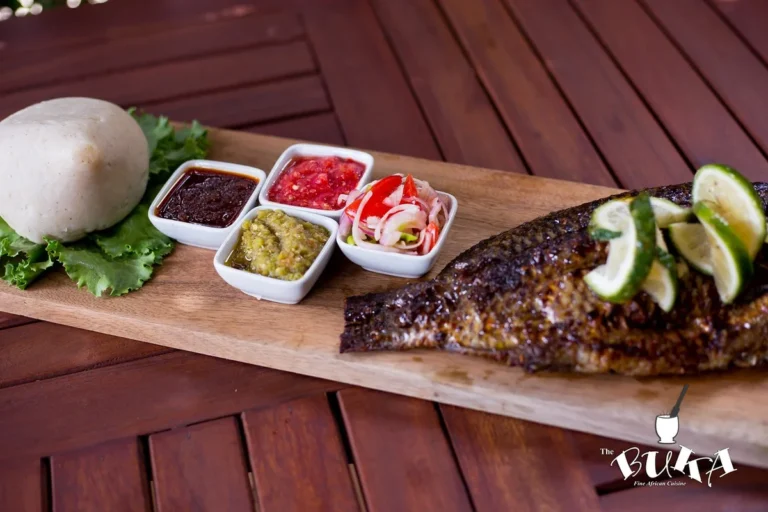
If there’s one plate that captures the soul of Ghana’s coast, it’s banku and tilapia — a soft, tangy ball of fermented dough beside a whole grilled fish, a fiery fresh-pepper sauce, and your fingers as the only cutlery you need. It’s the meal Ghanaians order to celebrate, to linger over with friends, and to argue happily over who grills the fish best. For a visitor, eating banku and tilapia by the water with a cold beer is one of the country’s great food experiences. Here’s everything to know — what it is, how it’s eaten, and where to find the best.
What is banku?
Banku is a smooth, slightly sour swallow made from a blend of fermented corn dough and cassava dough, cooked and stirred vigorously over heat until it forms a soft, stretchy, dumpling-like ball. The fermentation gives it its signature gentle tang — closer to sourdough than to plain starch — which is exactly what makes it the perfect foil for rich, spicy accompaniments. It’s a staple of southern Ghana, especially among the Ga, Fante and Ewe peoples of the coast (the Ewe make a closely related version called akple).
The tilapia — the star of the plate
The classic partner is a whole grilled tilapia, scored, seasoned and cooked over hot coals until the skin is charred and crisp and the flesh is smoky and tender. Freshwater tilapia from Lake Volta is prized for this. It arrives whole — head, tail and all — and is meant to be eaten by hand, picking the sweet flesh from the bones. Grilled to order at a “tilapia joint,” it’s smoky, juicy and utterly addictive.
The pepper makes the meal
Don’t overlook the sauce — for many, it’s the best part. Banku and tilapia comes with a fresh, raw pepper sauce: scotch bonnet (and often the aromatic kpakposhito pepper) ground with onion, tomato and sometimes a little dried fish or shrimp, served in an earthenware asanka bowl. It’s hot, bright and punchy, and you dip both the banku and the fish into it. Ask for it “small” if you’re sensitive — this sauce does not play around.
How it’s served and eaten
Banku and tilapia is finger food, eaten with the right hand. Wash up at the basin first, then pinch off a piece of banku, use it to scoop the pepper sauce, and alternate with flakes of grilled fish. There’s no neat way to do it and that’s the joy — it’s hands-on, social and unhurried. It pairs perfectly with a cold Club or Star beer. Banku also partners beautifully with okro (okra) stew or soup and with fried fish, if tilapia isn’t your thing.
Where it comes from
This is coastal, southern Ghanaian food at heart — the cooking of the Ga of Accra, the Fante of the central coast and the Ewe of the Volta. That heritage is why the best versions are so often found near water, where the fish is freshest and the tradition runs deepest. It’s everyday food and celebration food at once, equally at home at a roadside joint and a family gathering.
Where to eat the best banku and tilapia
Head for a dedicated “tilapia joint” or a riverside/seaside spot where the fish is grilled fresh to order — these are institutions in Accra (especially around the Spintex, Osu and Labadi areas) and along the coast and Lake Volta. Look for the charcoal grills and the crowd; an evening queue means fresh fish. A good chop bar will serve it too. As always, go where it’s busy and freshly cooked — see our food safety tips.
Is it healthy?
Pretty much, yes. Grilled tilapia is a lean, protein-rich fish, the fresh pepper sauce is essentially raw vegetables and chilli, and fermented banku is a source of slow energy with gut-friendly properties from the fermentation. Portion the banku sensibly (it’s filling) and it’s a genuinely balanced, nutritious meal — one of the healthier indulgences in the Ghanaian repertoire.
Banku vs the other swallows
Banku is one of a family of Ghanaian “swallows.” If you like it, here’s what else to try — and what makes each different.
| Swallow | Made from | Texture & taste | Home region | Classic pairing |
|---|---|---|---|---|
| Banku | Fermented corn & cassava dough, stirred | Smooth, stretchy, tangy | Ga / Ewe coast | Grilled tilapia & hot pepper, okro stew |
| Kenkey | Fermented corn, wrapped & steamed | Denser, sour | Ga (Ga kenkey) / Fante | Fried fish, pepper & shito |
| Fufu | Pounded cassava & plantain (or yam) | Soft, springy, mild | Ashanti / forest belt | Light soup or groundnut soup |
| Tuo Zaafi (TZ) | Maize (or millet) flour | Soft, smooth | Northern Ghana | Ayoyo or green-leaf soup |
| Konkonte | Dried cassava flour (“face the wall”) | Firm, earthy | Everyday / budget | Groundnut or palm-nut soup |
The bottom line
Banku and tilapia is Ghana’s ultimate grilled-fish meal — tangy fermented dough, smoky whole tilapia, and a fierce fresh-pepper sauce, all eaten by hand and washed down with a cold beer. Find a busy tilapia joint by the water in the evening, dive in with your right hand, go easy on (but don’t skip) the pepper, and take your time. It’s messy, communal, delicious and deeply Ghanaian — exactly the kind of meal you’ll be craving long after you leave. Discover what else to order in our Ghanaian food guide.