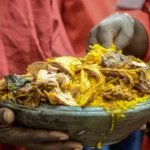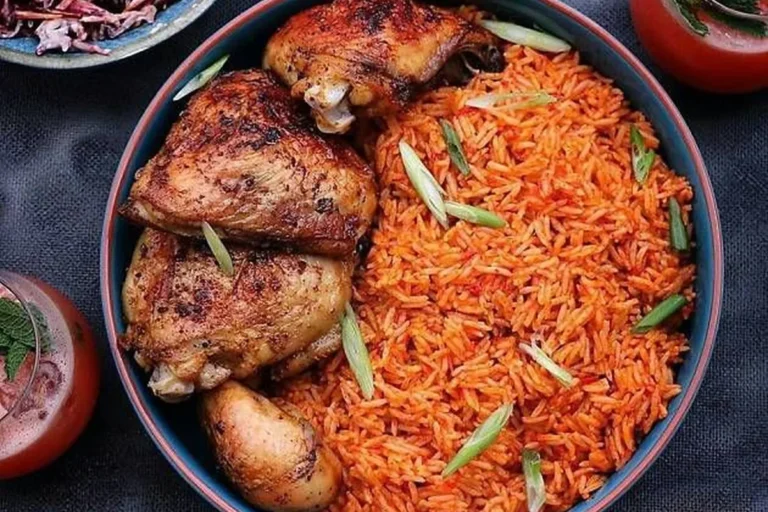
Ask a Ghanaian about jollof rice and watch their eyes light up — then narrow, because you’ve just opened the most passionately defended topic in West Africa. Jollof is more than the unofficial national dish; it’s a point of pride, the centrepiece of every party, and the spark of an international rivalry that plays out on social media every single year. This guide covers what jollof actually is, where it came from, what makes the Ghanaian version distinct, the great “Jollof Wars,” and exactly where (and how) to eat the best plate on your trip.
What is jollof rice?
At its simplest, jollof is rice cooked in a rich, spiced tomato-and-pepper base until every grain is stained red and packed with flavour. It’s a one-pot dish, traditionally cooked for a crowd, and it’s eaten across West Africa — Ghana, Nigeria, Senegal, Liberia, Sierra Leone and beyond — each with its own fiercely held version. In Ghana it turns up everywhere: at weddings and funerals, Sunday lunches, street stalls, chop bars and high-end restaurants alike. If there’s a celebration, there’s jollof.
Where jollof comes from
The dish traces back to the Wolof people of the Senegambia region (Senegal, the Gambia and Mauritania), where the original — thieboudienne (benachin) — is made with rice, fish and vegetables. As the dish travelled along trade and migration routes across West Africa, each community adapted it to local ingredients and taste, and the name shifted from “Wolof” to “jollof.” So when people argue over who “owns” jollof, the honest answer is that it’s a shared regional heritage that every country has made its own — which is exactly why the rivalry is so much fun.
What makes Ghanaian jollof different
Ghanaians will tell you their jollof simply tastes better — and there are real differences behind the boast:
- The rice: Ghana favours aromatic, perfumed long-grain rice (often jasmine-style), prized for its fragrance — whereas Nigerian jollof typically uses long-grain parboiled rice.
- The spicing: Ghanaian jollof tends to blend more aromatics — ginger and garlic go right into the pepper-and-tomato base — for a deeper, more layered flavour.
- The method: the protein (chicken, beef) is often seasoned and steamed in a ginger-onion-garlic puree first, then fried, and that stock feeds back into the rice.
- The finish: many cooks chase that smoky, slightly caramelised bottom-of-the-pot layer that Ghanaians treasure.
| Ghanaian jollof | Nigerian jollof | |
|---|---|---|
| Rice | Aromatic / jasmine-style | Long-grain parboiled |
| Spices | Ginger & garlic in the base; more aromatic | Bolder, often smokier “party” flavour |
| Texture | Fragrant, distinct grains | Soft, deeply infused |
| Served with | Shito, salad, plantain, chicken/fish | Fried plantain, moi moi, chicken |
The great Jollof Wars
The Ghana–Nigeria jollof rivalry is one of the internet’s most joyful food feuds. It flares up every year — on World Jollof Day (around late August), whenever a celebrity dares to pick a side, and across endless memes and tweets. It’s competitive, petty and entirely good-natured (mostly). As a visitor, the only correct move is to taste both with an open mind… and then, once you’ve had a properly cooked Ghanaian plate, quietly understand which side you’re on. Bringing it up with locals is a guaranteed icebreaker.
How Ghanaian jollof is made
You don’t need to cook it to appreciate it, but knowing the method deepens the respect. The base — blended tomatoes, red pepper, onion, ginger and garlic — is fried down hard with tomato paste and spices until rich and jammy. Seasoned, part-cooked protein and its stock go in, then the rice, which steams in the sauce until each grain is tender and stained. The patient cook lets the bottom catch just slightly for that prized smoky layer. It’s simple in theory and endlessly debated in practice — everyone’s auntie has the “real” recipe.
How it’s served
A classic Ghanaian jollof plate comes with fried plantain, a fresh salad or coleslaw, a protein (well-seasoned fried or grilled chicken, fish or beef), and crucially a spoon of shito, Ghana’s dark, smoky chilli sauce. At parties it’s ladled from a giant pot to feed the crowd — and “party jollof,” cooked over wood fire in huge quantities, has an almost mythical reputation for tasting better than anything you can make at home.
Regional twists worth seeking out
Jollof isn’t monolithic even within Ghana. The coastal town of Winneba is famous for a distinctive local style, and you’ll find subtle differences region to region and cook to cook. Keep an eye out, too, for jollof’s cousins on the same plate — it often shares space with waakye and other rice dishes at a good chop bar.
Where to eat the best jollof in Ghana
The truth every local knows: the best jollof is usually at a party, not a restaurant. If you get invited to a wedding, naming ceremony or funeral, say yes — that’s the gold standard. Failing an invite:
- Chop bars serve honest, everyday jollof for a few cedis — see our chop bars guide.
- Local “rice joints” and street vendors dish it from the pot, often with grilled chicken and shito.
- Restaurants in Accra do polished versions — see our best restaurants guide.
Follow the lunchtime queue: the busiest pot is busy for a reason. And read up on eating safely before you dive into street versions.
How to make Ghanaian jollof at home
Want to recreate the magic after your trip? Here is the home cook’s version, feeding about four.
You will need: 3 cups aromatic long-grain rice; 4 large tomatoes (or a tin) plus 2 tbsp tomato paste; 2–3 red bell peppers; 1–2 scotch bonnets (to taste); 2 onions; a thumb of ginger and 3 garlic cloves; chicken or beef with its stock; vegetable oil; bay leaves; and a Ghanaian spice mix (curry powder, dried thyme, a stock cube, salt and white pepper).
- 1. Season & cook the protein: season chicken or beef with a puree of onion, ginger and garlic, steam, then lightly fry — keep the stock.
- 2. Blend the base: blitz tomatoes, red peppers, scotch bonnet, one onion, ginger and garlic into a smooth puree.
- 3. Fry it down: saute the second onion in oil, add tomato paste, then the blended base, and fry patiently until thick, deep red and the oil rises — this is where the flavour is made.
- 4. Build the sauce: stir in spices, bay leaves and the reserved stock; simmer.
- 5. Add the rice: stir in washed rice until coated, cover tightly and cook on low, stirring occasionally, until tender; let the bottom catch slightly for that smoky layer.
- 6. Serve with the protein, fried plantain, salad and a spoon of shito.
The secret is patience at step three — rush the base and you will never get that signature depth.
Party jollof: why it always tastes better
Ask any Ghanaian where to find the best jollof and they will say a party, not a restaurant — and they are right. “Party jollof” is cooked in enormous pots, often over a wood fire, which lends a faint smokiness home stoves cannot match, and the sheer scale somehow deepens the flavour. Cooked by an experienced caterer for a wedding, funeral or naming ceremony, it is the platonic ideal of the dish. If you are ever invited to a celebration, accept — the food alone is worth it.
Common jollof mistakes to avoid
- Too much liquid — the rice turns mushy; add stock gradually.
- Under-frying the base — the number-one error; fry until the oil rises and the colour deepens.
- Wrong rice — use aromatic long-grain, washed, so it stays distinct.
- Rushing — low heat and patience give you tender grains and that prized smoky bottom.
The bottom line
Jollof is the edible heart of Ghanaian hospitality — a dish that turns up at every celebration and starts a friendly war every time someone claims theirs is best. Taste it widely: party jollof if you’re lucky, chop-bar jollof for the everyday truth, a restaurant plate for polish. Eat it with shito, plantain and salad, weigh in on the great Ghana-vs-Nigeria debate, and don’t be surprised when this simple pot of red rice becomes the flavour you crave long after you fly home. Keep exploring with our full Ghanaian food guide.