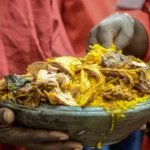
Ask a Ghanaian about their favourite food and there’s a good chance the answer is waakye. This humble dish of rice and beans — pronounced “waa-chey” — is the country’s ultimate comfort meal: cheap, filling, endlessly customisable, and beloved from dawn queues at roadside stalls to office lunch breaks. For a visitor, a proper plate of waakye with “the works” is one of the most authentic and satisfying things you can eat in Ghana. Here’s what it is, what goes on it, and how to order it like you know what you’re doing.
What is waakye?
Waakye is a Ghanaian dish of rice and beans cooked together — usually black-eyed peas or cowpeas — with dried red sorghum leaf stalks and a touch of kaun (a food-grade limestone). Those sorghum leaves are the secret: they give the dish its distinctive reddish-brown colour and subtle earthy flavour (the leaves are removed before serving). The name comes from the Dagbani language of northern Ghana — in Hausa it’s shinkafa da wake, “rice and beans” — reflecting its roots in the north before it conquered the whole country.
The full works: what goes on a waakye plate
Waakye is really a build-your-own feast. A loaded plate — traditionally served on a banana leaf for extra aroma — can include:
- Shito — the essential dark, smoky chilli sauce.
- Gari — toasted cassava granules for texture.
- Spaghetti — known locally as talia (yes, pasta on rice; it works).
- Boiled egg — a classic topper.
- Wele — soft cooked cow skin, a much-loved addition.
- Fried plantain, salad (cabbage, onion, tomato), and a protein — fish, chicken or beef — with a spoon of stew over everything.
Half the joy is choosing your combination at the stall.
When and how it’s eaten
Waakye is classic breakfast and lunch food — many Ghanaians swear by it first thing, and the best “waakye sellers” draw queues from early morning. A crucial local truth: the good pots sell out, often by late morning, so the early bird genuinely gets the waakye. It’s typically eaten with a spoon (or by hand), is hugely filling, and keeps you going for hours — the perfect fuel before a day of exploring.
How it’s made
The rice and beans are simmered together with the sorghum leaf stalks (and a little kaun, which helps soften the beans and deepen the colour) until tender and stained that signature red-brown. The leaves are then discarded, and the waakye is served with its long cast of accompaniments. It’s simple peasant cooking elevated by the toppings — comfort food in its purest form.
Where to eat the best waakye
The best waakye almost never comes from a restaurant — it comes from a dedicated roadside waakye seller, often a woman known across the neighbourhood for her pot, with a queue to match. Ask locals or your driver for the famous spot nearby; every area has one, and reputations are fiercely held. Go in the morning for the freshest serving and the full range of toppings before they run out. For eating-safely tips, see our street food guide.
How to order like a local
Ordering waakye is an art of add-ons. Start simple — “waakye with everything” works — or build it: name your protein and your toppings (shito and gari are non-negotiable for most). Say how much pepper you want (“small” if you’re cautious). Pay in cash or Mobile Money, find a spot, and dig in. Don’t overthink it; the seller will guide you, and they love a curious visitor.
Build your waakye: the toppings explained
| Topping | What it is |
|---|---|
| Shito | Dark, smoky chilli sauce (essential) |
| Gari | Toasted cassava granules for crunch |
| Talia | Spaghetti — yes, on the rice |
| Wele | Soft cooked cow skin |
| Boiled egg | A classic protein topper |
| Salad & plantain | Cabbage-onion-tomato salad; fried plantain |
Is waakye healthy?
At its core, waakye is a wholesome combination of rice and beans — a complete plant protein with fibre and slow-release energy, which is partly why it keeps you full for so long. How healthy your plate is really depends on the toppings: pile on plenty of beans, salad and a lean protein and it’s genuinely nutritious; go heavy on fried elements, spaghetti and extra oil and it becomes more of an indulgence. Either way, it’s honest, satisfying food.
The bottom line
Waakye is Ghana on a plate — humble rice and beans transformed by sorghum-leaf colour, smoky shito and a pile-up of toppings into the country’s favourite comfort meal. Get to a famous waakye seller early before the pot runs dry, order it “with the works,” go easy on the pepper if you must, and eat it the way millions of Ghanaians start their day. It’s cheap, filling and unforgettable — and one of the truest tastes of Ghana. Explore more in our Ghanaian food guide.