To understand Ghana, you have to understand its history — because it runs through everything you’ll see, from the slave castles on the coast to the kente of the Asante court to the proud, Pan-African confidence of the people. This is the land of ancient gold kingdoms, the epicentre of the transatlantic slave trade, and the first country in sub-Saharan Africa to win independence, under the towering figure of Kwame Nkrumah. Here’s a traveller’s guide to Ghana’s history — the story behind the sights.
Ancient kingdoms and gold
Long before Europeans arrived, powerful states flourished in what is now Ghana. Trans-Saharan trade fed northern kingdoms, while in the forest the Asante (Ashanti) Empire rose from the late 17th century into one of West Africa’s most sophisticated and militarily formidable states, unified — legend says — by the priest Okomfo Anokye and the sacred Golden Stool. The land’s gold gave the coast its colonial name, the “Gold Coast,” and the wealth that drew the world.
The Gold Coast and the slave trade
From 1482, when the Portuguese built Elmina Castle, European powers — Portuguese, Dutch, British, Danish, Swedish and German — competed for trade along the coast, raising the forts and castles that still stand today. First gold, then, devastatingly, people: for over three centuries this coast was a hub of the transatlantic slave trade, with captives held in dungeons before the Door of No Return. It’s a history confronted head-on at Cape Coast and Elmina (see our castles & forts guide).
Colonialism and the Asante wars
Through the 19th century, Britain extended control over the Gold Coast, clashing repeatedly with the Asante in a series of Anglo-Asante wars; the Asante resisted fiercely, and the British even exiled the Asantehene before the kingdom was eventually absorbed into the colony. By the early 20th century the Gold Coast was a British colony — prosperous from cocoa and gold, but agitating, increasingly, for self-rule.
Nkrumah and independence
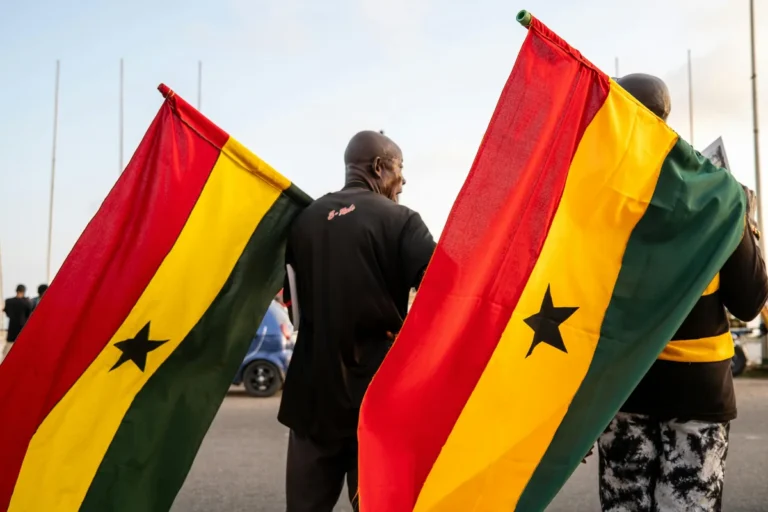
The hero of the modern story is Kwame Nkrumah. Leading the independence movement, he made the Gold Coast the first country in sub-Saharan Africa to win independence, on 6 March 1957, renaming it Ghana after a great medieval empire. Nkrumah became a global icon of Pan-Africanism, dreaming of a united continent; his legacy is everywhere, from Black Star Square to the Kwame Nkrumah Memorial (see our Accra guide). The country later weathered coups and military rule before settling into the stable democracy it is today.
Pan-Africanism and the diaspora
Ghana has long been a magnet for the African diaspora. The Pan-Africanist W.E.B. Du Bois spent his final years in Accra (his home is now a memorial centre), and that connection endures powerfully today — the 2019 Year of Return invited the global diaspora “home,” and the homecoming energy lives on in Detty December and the pilgrimage to the slave castles.
Where to encounter Ghana’s history
- Cape Coast & Elmina castles — the slave trade, up close (our Cape Coast guide).
- Assin Manso — the slave river and ancestral memorial.
- Manhyia Palace, Kumasi — the living Asante kingdom (our Kumasi guide).
- Black Star Square & the Nkrumah Memorial, Accra — independence and Pan-Africanism.
- The northern slave-defence walls (Nalerigu, Gwollu) and Salaga slave market.
The bottom line
Ghana’s history is the thread that ties the trip together — ancient gold kingdoms, the long shadow of the slave trade, the triumph of independence under Nkrumah, and a living Pan-African spirit that still calls the diaspora home. Visit the castles, Manhyia and Black Star Square with that story in mind, and everything you see gains depth. Go deeper with our culture and castles & forts guides.