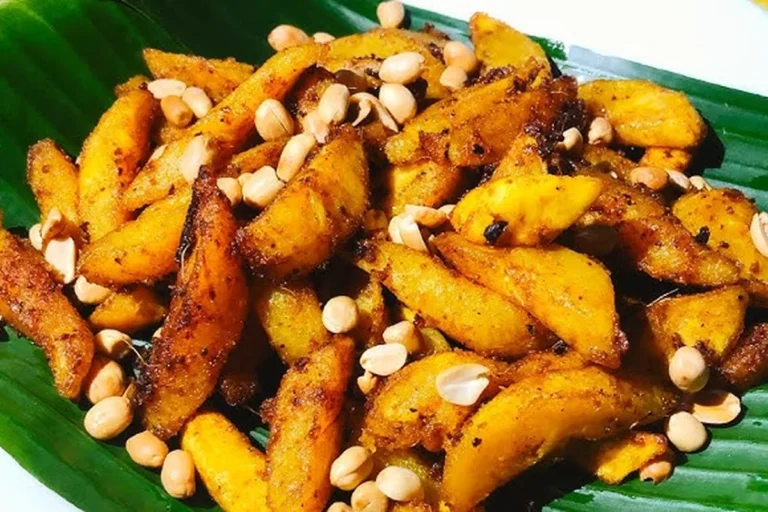
Walk through any Ghanaian town as the sun goes down and you’ll smell it before you see it: the warm, spicy, caramel scent of kelewele frying at a roadside stall. These little cubes of ripe plantain, marinated in ginger and chilli and fried until sticky-sweet and crisp at the edges, are Ghana’s favourite street snack — cheap, addictive and impossible to eat just one of. Here’s what kelewele is, what gives it that unmistakable flavour, when and how to eat it, and how to make it yourself when the craving hits back home.
What is kelewele?
Kelewele (pronounced “kay-lay-way-lay”) is ripe plantain, cut into chunks, tossed in a spicy-sweet marinade, and deep-fried. The magic is the contrast: the plantain caramelises as it fries, turning jammy and sweet inside while the spices form a savoury, gingery, chilli-hot crust. It’s that sweet-meets-fiery balance that makes it so moreish. Originating in Ghana and especially associated with the Ga of Accra, it’s now beloved nationwide and a fixture of the evening street-food scene.
The spice mix that makes it
Kelewele lives and dies by its marinade. The core is fresh ginger and dried chilli/cayenne pepper, but the best versions layer in warm spices that give it real depth:
- Ginger — the dominant, zingy note.
- Cayenne / dried red pepper — the heat.
- Cloves and nutmeg — warmth and aroma.
- Aniseed or calabash nutmeg (hwentia) — the secret, slightly liquorice-like depth in traditional recipes.
- Salt — to balance the sweetness.
Some vendors keep a closely guarded blend — which is why one stall’s kelewele can taste noticeably better than the next.
When and how to eat it
Kelewele is above all an evening snack — the stalls fire up as the day cools, and a paper cone of hot kelewele is the classic after-dark treat. It’s most traditionally eaten with a handful of roasted groundnuts (peanuts), the nutty crunch playing off the spicy-sweet plantain perfectly. But it’s versatile: it also turns up as a side dish alongside rice and beans, koko (porridge), bean stew or grilled fish, and even as a bar snack with a cold beer. Eat it hot, straight from the cone.
Where to find the best kelewele
This is street food, so head to the roadside vendors — you’ll find them on busy corners and outside nightlife spots come evening, frying to order. The freshest is the best: look for a stall with a steady queue and plantain going into the oil as you watch. Many chop bars and local restaurants serve it too. As ever, busy and freshly fried is the rule — see our street food safety guide.
Make kelewele at home
It’s genuinely easy to recreate. You’ll need very ripe plantains (the skin should be yellow with black spots), plus fresh ginger, cayenne, a pinch of cloves and nutmeg, anise if you can get it, and salt.
- 1. Peel and cube the ripe plantains.
- 2. Blend or grate the ginger with the spices and salt into a paste (add a splash of water).
- 3. Toss the plantain in the spice mix and let it marinate for 10–15 minutes.
- 4. Deep-fry in hot oil until deep golden-brown and caramelised at the edges.
- 5. Drain and serve hot, with roasted groundnuts on the side.
The riper the plantain, the sweeter and stickier the result — don’t use green ones.
Is kelewele healthy?
It’s a fried treat, so enjoy it as one — but it’s not without virtue. Plantains bring fibre, potassium and vitamins, the ginger and spices have their own benefits, and a portion with groundnuts even adds some protein. It’s a far better street snack than most, and in moderation it’s a perfectly reasonable indulgence. The bigger point: it’s delicious, and a trip to Ghana without it is a trip half-lived.
How kelewele compares
Ghanaians do a lot with plantain, and it’s easy to mix them up. Here’s where kelewele sits among its cousins.
| Dish | What it is | Plantain used | Spiced? | Usually eaten |
|---|---|---|---|---|
| Kelewele | Cubed plantain fried with ginger, chilli & spices | Ripe (soft, sweet) | Yes — hot & gingery | As a snack, or with groundnuts or rice |
| Kaakro | Mashed plantain balls, deep-fried | Very ripe | Lightly (ginger, pepper) | Snack, roadside |
| Tatale | Spiced plantain pancakes | Over-ripe | Yes | With beans (aboboi) |
| Red-red | Bean stew served with fried plantain | Ripe | Plantain plain, stew spiced | Main meal |
| Ampesi | Boiled plantain (or yam/cocoyam) | Unripe/green | No | With kontomire or garden-egg stew |
The bottom line
Kelewele is the snack that defines a Ghanaian evening — spicy, sweet, gingery cubes of fried plantain best eaten hot from a roadside cone with a handful of groundnuts. Seek out a busy stall after dark, ask for it freshly fried, and don’t be surprised when it becomes the flavour you most want to recreate at home (which, happily, you can). Simple, cheap and completely addictive, it’s Ghanaian street food at its very best. Find more to try in our Ghanaian food guide.