No dish sits closer to the Ghanaian heart than fufu. Soft, stretchy and eaten by hand from a shared bowl of fragrant soup, it’s the ultimate comfort food and a Sunday-lunch institution. For a visitor, eating fufu properly — pinched, dipped and swallowed, not chewed — is a rite of passage and one of the most fun, hands-on food experiences in the country. Here’s what fufu is, how it’s made, the soups that complete it, and exactly how to eat it like a local without embarrassing yourself.
What is fufu?
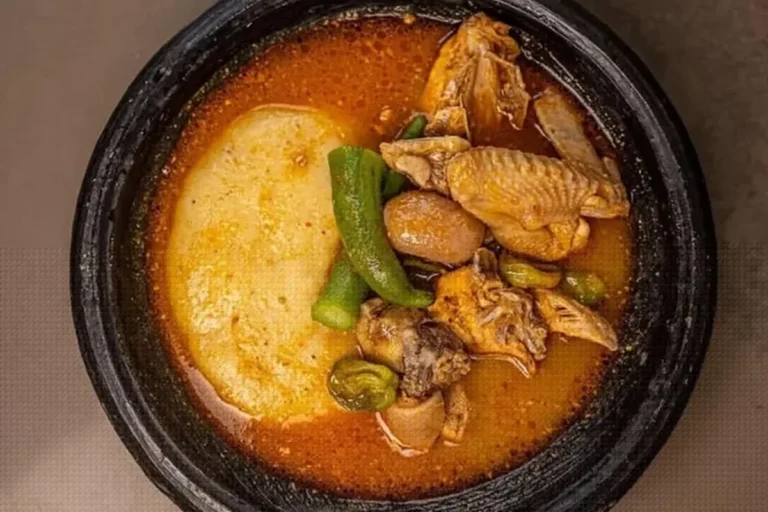
Fufu is a soft, doughy staple made by boiling starchy crops — in Ghana, usually cassava combined with plantain (or cocoyam) — and pounding them into a smooth, elastic, slightly sticky dough. It’s believed to have originated with the Akan peoples (the Asante, Akuapem, Akyem, Bono and Fante) of present-day Ghana, and it remains the proud centrepiece of the cuisine. Served as a smooth mound in a bowl, it’s never eaten alone — it’s the vehicle for Ghana’s wonderful soups.
How fufu is made
Traditional fufu is a workout. Boiled cassava and plantain are pounded together in a large wooden mortar with a heavy pestle, while a second person turns and wets the mixture by hand between blows — a rhythmic, two-person dance that takes skill and stamina. The result is that signature smooth, stretchy texture. These days many homes and restaurants use fufu-pounding machines or instant fufu flour, but the hand-pounded version, often heard before it’s seen in a village, is the real deal.
The soups that complete it
Fufu lives and dies by its soup. The classics:
- Light soup — a clear, spicy tomato-and-pepper broth with goat, fish or chicken; the most popular pairing.
- Groundnut (peanut) soup — rich, creamy and comforting.
- Palm-nut soup — deep, oily and intense, made from palm fruit.
Each is generously spiced and usually loaded with meat or fish. Order “fufu and light soup with goat” and you’re speaking the language.
How to eat fufu like a local
This is the important part. Fufu is eaten with the right hand — no cutlery. The technique:
- Wash your hands at the basin provided first.
- Pinch off a small piece of fufu with your right-hand fingers and roll it into a little ball.
- Make a small dent and scoop up some soup with it.
- Swallow it whole — do not chew. This is the golden rule; fufu is meant to slide down, and chewing it marks you instantly as a first-timer.
Sip the soup directly from the bowl too. It feels strange at first and utterly natural by the end of the meal.
First-timer tips and etiquette
- Use only your right hand — the left is considered unclean.
- Start with small pieces while you get the hang of the no-chew swallow.
- Go easy on the pepper — ask for it “small” if you’re unsure; the soups can be fierce.
- Embrace the mess — it’s hands-on food and locals will happily show you how.
- Don’t fill up too fast — fufu is deceptively filling.
Variations and where to try it
Fufu has cousins across West Africa, and even within Ghana the base varies — cocoyam fufu, plantain-heavy versions, and the northern preference for tuo zaafi as their swallow of choice. The best place to try fufu is a chop bar at lunchtime or, if you’re lucky enough to be invited, a Ghanaian home on a Sunday. It’s on the menu everywhere from humble pots to smart restaurants — but the chop-bar version is the most authentic.
Types of fufu and other swallows
| Swallow | Made from | Region/note |
|---|---|---|
| Cassava-plantain fufu | Cassava + plantain | The Ghanaian classic |
| Cocoyam fufu | Cocoyam (+ plantain) | Common variation |
| Banku | Fermented corn & cassava | Sour, with tilapia/okro |
| Konkonte | Dried cassava flour | Budget-friendly staple |
| Tuo Zaafi | Maize/millet | The northern favourite |
Is fufu healthy?
Fufu is energy-dense and carbohydrate-rich — great fuel for an active day, though heavy if you’re not used to it. The nutrition really comes from what surrounds it: the soups bring protein from meat or fish, and palm-nut and groundnut soups add healthy fats and micronutrients. It’s naturally gluten-free, which suits some travellers. Eat it as the locals do — a moderate ball of fufu in a generous, protein-rich soup — and it’s a balanced, deeply satisfying meal.
The bottom line
Fufu is the soul of Ghanaian food — pounded cassava and plantain, a bowl of fiery soup, and the simple, joyful ritual of eating with your hand. Pinch it, dip it, and swallow without chewing; use your right hand, go gentle on the pepper, and let a local coach you through your first bowl. Get it right and you’ve unlocked one of Ghana’s most beloved experiences — messy, communal and completely delicious. See what else to order in our Ghanaian food guide.