If the coast is where Ghana’s history was written, the Ashanti Region is where its soul still lives. This is the heartland of the Asante (Ashanti) Kingdom — a living monarchy centred on Kumasi, surrounded by the craft villages that gave the world kente cloth and adinkra symbols, and wrapped in green forest hills with a sacred crater lake at their centre. For anyone interested in culture, the Ashanti Region is the most rewarding part of the country. Here’s what to see, when to go, and how to fit it into your trip.
The vibe
Proud, traditional and deeply cultural. The region revolves around Kumasi, the Asante capital and Ghana’s second city — dense, busy and ceremonial, still ruled in cultural terms by the Asantehene from Manhyia Palace. Step outside the city and you’re among kente looms, adinkra stamps, woodcarvers and a sacred lake. It feels distinctly different from the coast: more inland, more rooted, more about people and heritage than beaches.
Top things to do in the Ashanti Region
| Sight | What it is |
|---|---|
| Manhyia Palace Museum | Seat of the Asante king; the kingdom’s history |
| Kejetia Market | One of West Africa’s largest markets (~12,000 stalls) |
| Bonwire & Adanwomase | Kente-weaving villages — watch & buy direct |
| Ntonso | Adinkra cloth stamping village |
| Lake Bosomtwe | Ghana’s only natural lake, a sacred crater |
| Okomfo Anokye Sword | The legendary sword tied to the kingdom’s founding |
| Bobiri / Owabi | Butterfly sanctuary & bird reserve |
For the city in depth, see our Kumasi travel guide; for the crafts, our kente and adinkra symbols guides.
The living culture
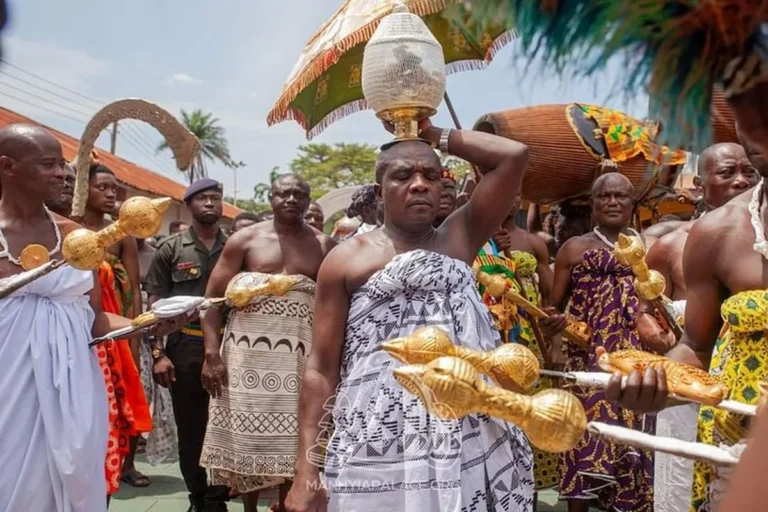
The Ashanti Region is where Ghanaian culture is at its most visible. Time your visit to an Akwasidae festival — held roughly every six weeks on a Sunday at Manhyia Palace, when the Asantehene receives his chiefs in full kente-and-gold regalia — and an interesting trip becomes unforgettable. The craft villages let you watch kente woven on the strip loom at Bonwire, adinkra stamped with calabash at Ntonso, and stools carved at Ahwiaa — and buy straight from the makers.
Lake Bosomtwe
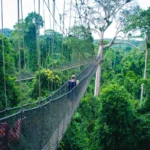
About 30km southeast of Kumasi, Lake Bosomtwe is Ghana’s only natural lake — a serene meteorite crater ringed by forested hills and villages, considered sacred by the Asante. It’s the perfect half-day escape from Kejetia’s intensity: swim, paddle, eat fresh fish and slow right down.
When to go
The dry season (November to March) is most comfortable for the city and craft villages. But the real prize is timing your trip to an Akwasidae — check the dates in our festivals guide. See also our best time to visit overview.
Getting there and around
From Accra, fly to Kumasi (under an hour) or drive (4–5 hours). Within the region, use ride-hailing and taxis in the city; for the craft villages and Lake Bosomtwe, a hired car or driver for the day is most efficient. Two nights is the sweet spot — it slots neatly into a 10-day Ghana itinerary after the coast.
Explore the Ashanti Region’s attractions
Tap any place for the full details, map and visitor tips.
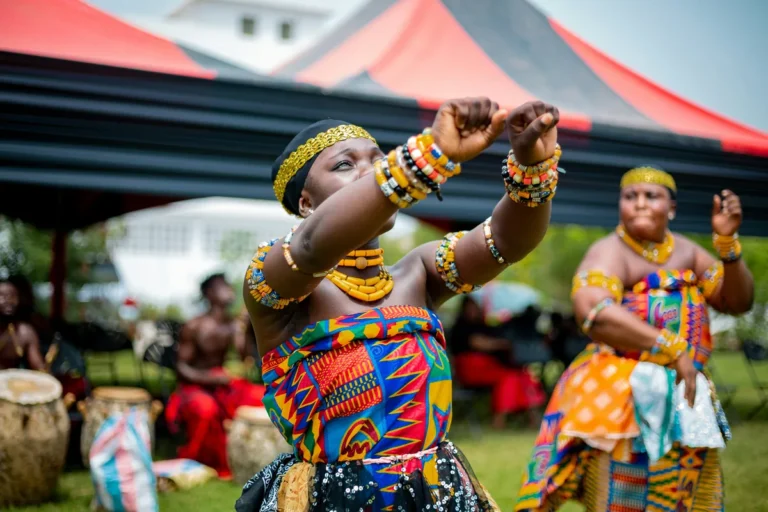
Akwasidae Festival
The Asante royal festival every 42 days at Manhyia, Kumasi - the Asantehene in full regalia. Time a Kumasi trip around it.
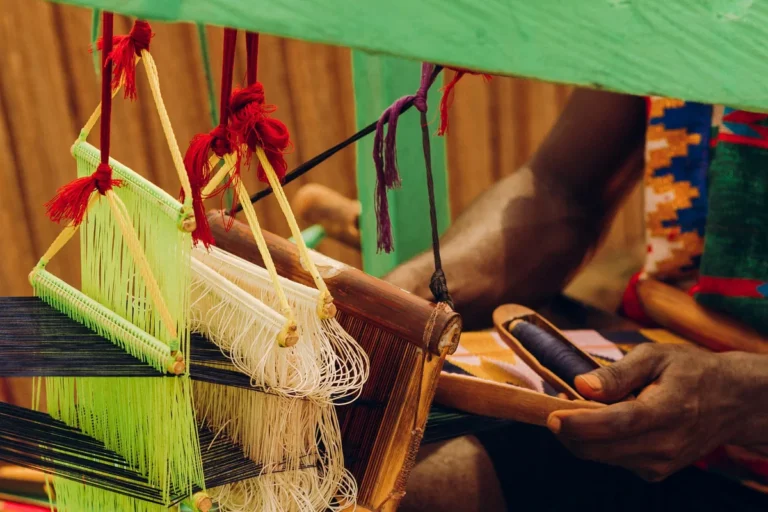
Bonwire Kente Village
Buy direct from weavers. Negotiate respectfully. GHS 350–800/yard hand-woven.
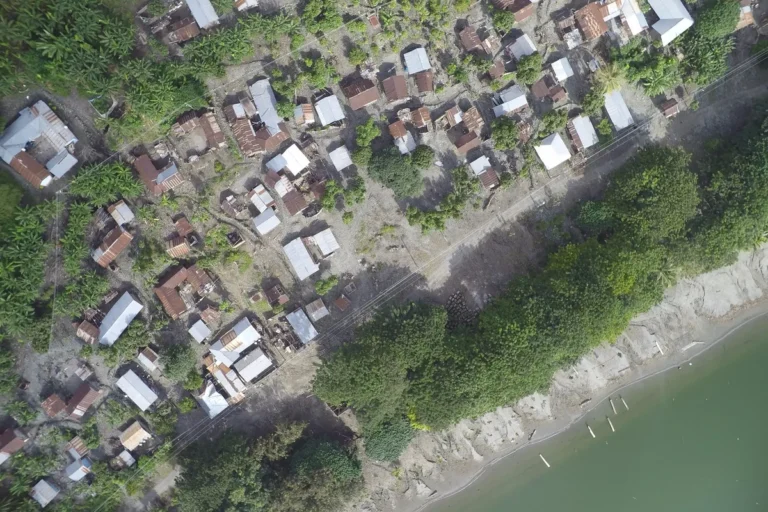
Lake Bosomtwe
Sacred crater lake. No motorboats — traditional paddleboats only. Swim allowed.
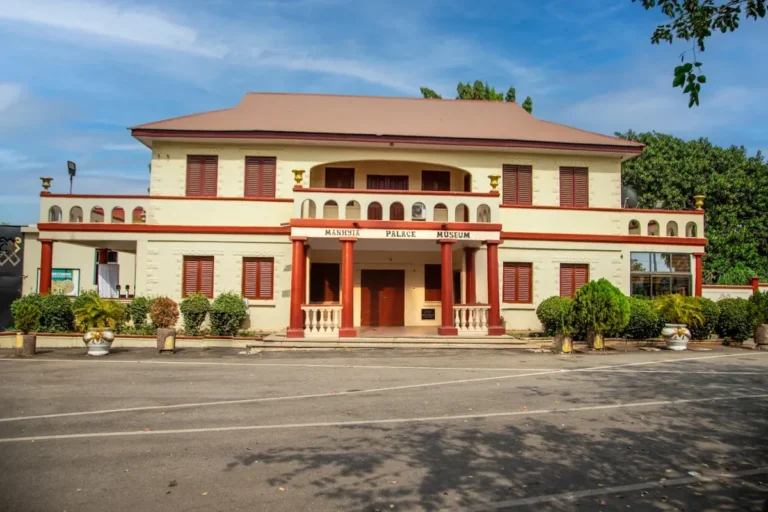
Manhyia Palace Museum
Seat of the Asantehene. Audio guide is excellent. Underrated.
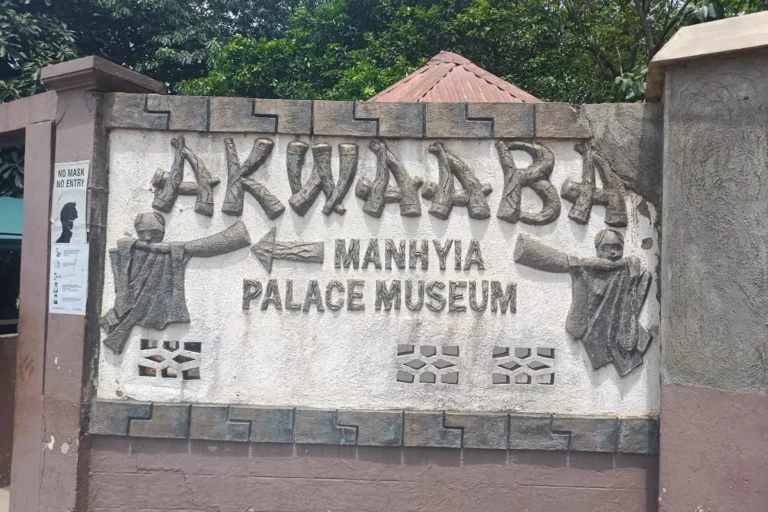
Manhyia Palace Museum — full visitor guide
Current palace rebuilt 1974, replica of original burned by British 1874. Museum: Golden Stool replica, colonial photos, royal regalia, Prempeh I artefacts.…
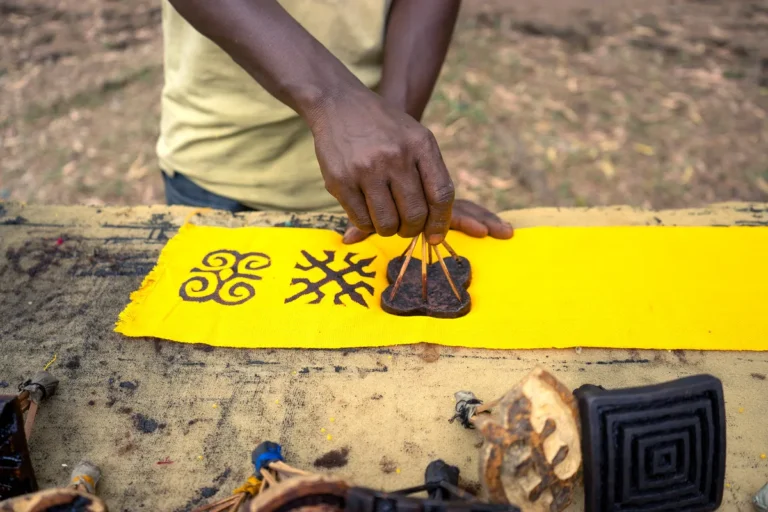
Ntonso Adinkra Village
Stamp your own Adinkra fabric. Watch the whole process — bark boiling to stamping.
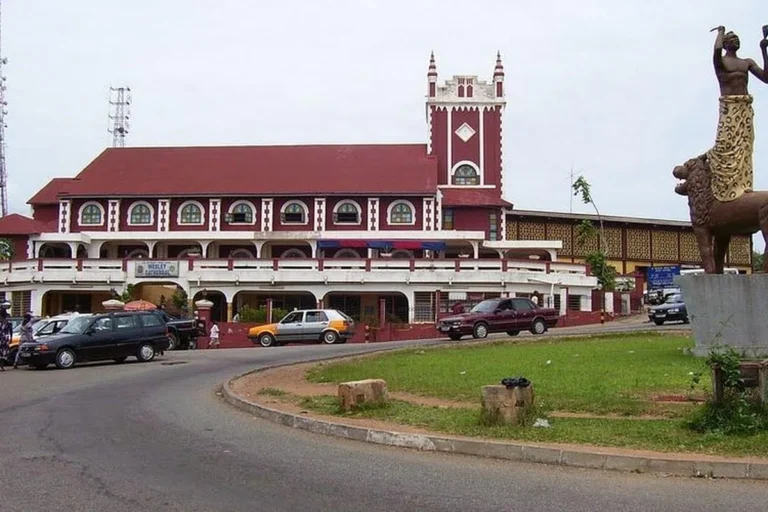
Wesley Methodist Cathedral, Kumasi
A Romanesque Methodist cathedral near central Kumasi, part of the city's deep Methodist tradition.
Where to stay
Stay central in Kumasi for easy access to Manhyia Palace and Kejetia, where you’ll find a good range of mid-range hotels and guesthouses; quieter options sit out toward the university and Lake Bosomtwe, which makes a scenic, calmer base. Book ahead if your visit coincides with an Akwasidae festival, when the city fills up.
What to eat
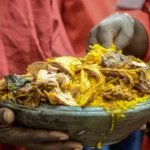
You’re in the fufu heartland, so eat it at its best — smooth pounded fufu in light or groundnut soup — alongside ampesi (boiled yam or plantain with stew), an Ashanti comfort classic. Follow the lunchtime crowds to the chop bars around Kejetia; see our Ghanaian food guide.
How long to spend
Two nights is the sweet spot: one day for Manhyia, Kejetia and the city, another for the craft villages (Bonwire, Ntonso, Ahwiaa) or a half-day at Lake Bosomtwe. It slots naturally into a wider loop after the coast — see our itinerary guide.
The bottom line
The Ashanti Region rewards anyone curious about the real cultural depth of Ghana. Anchor on Manhyia Palace and Kejetia, spend a day with the kente and adinkra makers, unwind at Lake Bosomtwe — and if an Akwasidae falls during your trip, build everything around it. Two days here adds a dimension the coast can’t. Plan it with our Kumasi guide and itinerary.